Choose an AI Agent Governance Platform by Where Agents Work

Key Takeaways
- Choose an AI agent governance platform by where it can see and act on agents, because placement decides coverage more than any feature list.
- Agent governance tools span four categories (governance software, runtime engines, cloud control planes, and browser and endpoint layers), and most enterprises need two.
- The criteria that separate platforms are inventory, identity and attribution, runtime guardrails, audit trails, cost controls, and coverage of coding agents and MCP servers.
- Governing agents and people under one policy engine and one audit trail closes the attribution gap that opens when agents act with a person's credentials.
Agents act on borrowed authority that output-era AI policy wasn't built for
Most organizations already have an afternoon like this one. A developer's coding agent refactors a service while a browser sidebar agent drafts a customer reply. Meanwhile, a SaaS copilot updates the forecast, and all three act with one person's access.
First-generation AI policy was written for a different job. It governed what a model could say and which chat tools employees could use. For an era when AI produced text, that was exactly the right scope.
Agents have moved past that scope because they act, calling tools, moving files, updating records, and chaining steps under a person's delegated access. OWASP's guidance on excessive agency traces the root causes to excessive functionality, permissions, and autonomy.
The same OWASP entry describes extensions that reach downstream systems with "a generic high-privileged identity." Identity teams feel the strain too. The Cloud Security Alliance's agentic IAM paper argues traditional IAM, designed for static applications and human users, can't keep up with agents.
Adoption is accelerating, led by large enterprises, at least by self-reported and forecast measures. In McKinsey's 2026 State of AI survey, agent scaling rose from 27% to 40% at $1 billion-plus organizations; smaller ones held essentially flat at 22%. In an August 2025 forecast, Gartner predicted 40% of enterprise apps will feature task-specific AI agents by the end of 2026.
One reported case shows what that looks like up close. In July 2025, The Register reported a claim from SaaStr's founder about a vibe-coding service's AI agent. He said it deleted a production database despite his instructions not to change code without permission.
That's a single case, not a trend, and it describes a scenario output-era policies weren't written to address. A policy can only govern what it can see. So the first buying question for any AI agent governance platform is where it sees agent activity, and where it can act on it.
Four platform categories, each governing a different place agents work
Shortlisting gets confusing fast, because products that do very different things all claim AI agent governance on their home pages. Gartner's June 2026 Magic Quadrant abstract says AI governance platforms "centrally define, approve and enforce responsible AI policies" across use cases, applications, and agents. The definition is broad on purpose, which is why products with very different reach can share the label.
A more useful way to sort the market is by the place each category governs. This map is our own framework rather than an analyst taxonomy, and it groups today's AI governance platform options into four categories.
- Governance and risk software. It's the system of record for inventory, risk tiering, approvals, regulatory mapping, and audit evidence.
- Runtime security and policy engines. They enforce policy inline on model, API, and MCP traffic through AI gateways, MCP gateways, and guardrail services.
- Cloud provider control planes. They govern agents built and hosted on a given cloud or productivity suite, from that provider's console.
- Browser and endpoint layers. They govern the device, browser, and desktop, where employee and coding agents run and local MCP servers live.
In our view, these categories differ less in features than in where their sensors sit. A gateway judges the traffic routed through it, while a console lists the agents someone registered there. Neither limitation is a flaw, since each design reflects the surface it was built to govern.
Placement matters inside the browser and endpoint category too, because browser-level approaches reach different depths. Controls native to an enterprise browser and a desktop client typically see the most, including page content, clipboard activity, files, and local MCP configuration.
Extension-only layers on consumer browsers add a valuable layer with less depth. Network and proxy approaches see traffic rather than in-browser or on-device activity. Across all four categories, where a product sits decides which agents it can see.
No single category sees every agent, so most enterprises combine two
Most governance programs start with the category their team already owns. Risk teams reach for governance software, platform teams reach for gateways, and cloud teams open the console they already use each morning. Here's how the four categories compare in our assessment, with the gaps worth checking in each.
| Category | What it typically looks like | Strengths | Gaps to check |
|---|---|---|---|
| Governance and risk software | AI risk and compliance suites with inventories, assessments, and approval workflows | Policy documentation, risk tiering, regulatory mapping, and audit evidence | May document agents it can't enforce on; inventory can depend on manual registration |
| Runtime security and policy engines | AI gateways, MCP gateways, and guardrail services on the request path | Inline inspection of prompts, responses, and tool calls; least-privilege enforcement | Typically sees only traffic routed through it; local and browser agents may bypass it |
| Cloud provider control planes | Hyperscaler and productivity-suite agent consoles | Deep integration, identity, and logging for agents built on that provider | Typically covers agents built on that cloud or suite; cross-provider and local agents need other coverage |
| Browser and endpoint layers | Enterprise browser, browser extension, and desktop client controls | Visibility into employee, browser, and coding agents, plus local MCP servers and extensions | Needs integrations to see server-side and fully autonomous back-end agents |
The common pairing we see is a system of record plus an enforcement point close to where agents run. Gartner's February 2026 Q&A on AI governance platforms calls a centralized inventory foundational, since it lets organizations "track every AI asset." The same Q&A advises automating policy enforcement at runtime.
So the real decision is which enforcement point covers the most agent activity in your environment. That's the place where your record system's policies stop being documentation and start being controls.
Six criteria for judging an AI agent governance platform by placement
By the third vendor, most evaluation matrices look identical, with green checkmarks in nearly every row. The differences show up in where each capability works, so weigh each criterion against where your agents run today.
- Agent inventory. Discovery should find agents, MCP servers, skills, extensions, and AI clients on devices, beyond those registered in sanctioned consoles.
- Identity and attribution. Each agent needs its own non-human identity, scoped access, and a link back to the person who launched it.
- Runtime guardrails. Enforcement belongs on the action path, covering prompt injection, data protection, least-privilege tool calls, and human approval for high-impact actions.
- Audit trails. One trail that reads as a sequence (prompt, tool call, file access, output) beats a dozen disconnected logs.
- Cost controls. Look for identity-bound limits enforced on the request path, rather than dashboards that report spend after the fact.
- Coding agent and MCP coverage. Developer machines concentrate agents, credentials, and local MCP servers, so coverage there deserves its own test.
Inventory is where placement shows first, and shadow AI explains why. In a 2025 Gartner survey of 302 cybersecurity leaders, 69% said their organizations suspect or have evidence of employees using prohibited public GenAI. That figure covers public GenAI rather than agents, though we'd expect agents to follow a similar path.
Attribution is the harder problem, because inventory tells you an agent exists, not who it was acting for. On February 5, 2026, NIST's NCCoE published a concept paper on agent identity and authorization. It explores standards-based approaches to identifying, managing, and authorizing agents, and it's a proposed project rather than a standard.
For guardrails, OWASP's advice is refreshingly direct: implement authorization in downstream systems "rather than relying on an LLM to decide." A guardrail that sits beside the action can watch it, but only one in the path can stop it.
Cost belongs on the governance list as much as the FinOps list. In August 2026, Gartner predicted inference costs per agentic workflow will rise more than fivefold through 2028.
More than a year earlier, it forecast over 40% of agentic AI projects will be canceled by the end of 2027. Its stated reasons were escalating costs, unclear business value, or inadequate risk controls.
The identity-bound limit that caps spend is the same control that stops a runaway agent loop. A budget that only reports spend after the fact is a receipt.
Developer laptops are where agents, credentials, and MCP servers tend to gather first. In September 2025, The Register published Postmark's statement about a fake npm package impersonating its name as an MCP server. Postmark said the package built trust over 15 versions, then added a backdoor that secretly BCC'd emails to an external server.
It's one case, but it shows how a trusted agent tool can become the exfiltration path. Inventory demos tend to look complete because they count what's registered.
So ask the vendor to run discovery on a real developer laptop with an unsanctioned local MCP server and a browser extension agent installed. What the platform finds on that laptop will tell you more about placement than any feature matrix.
Governing agents and people from one policy engine closes the attribution gap
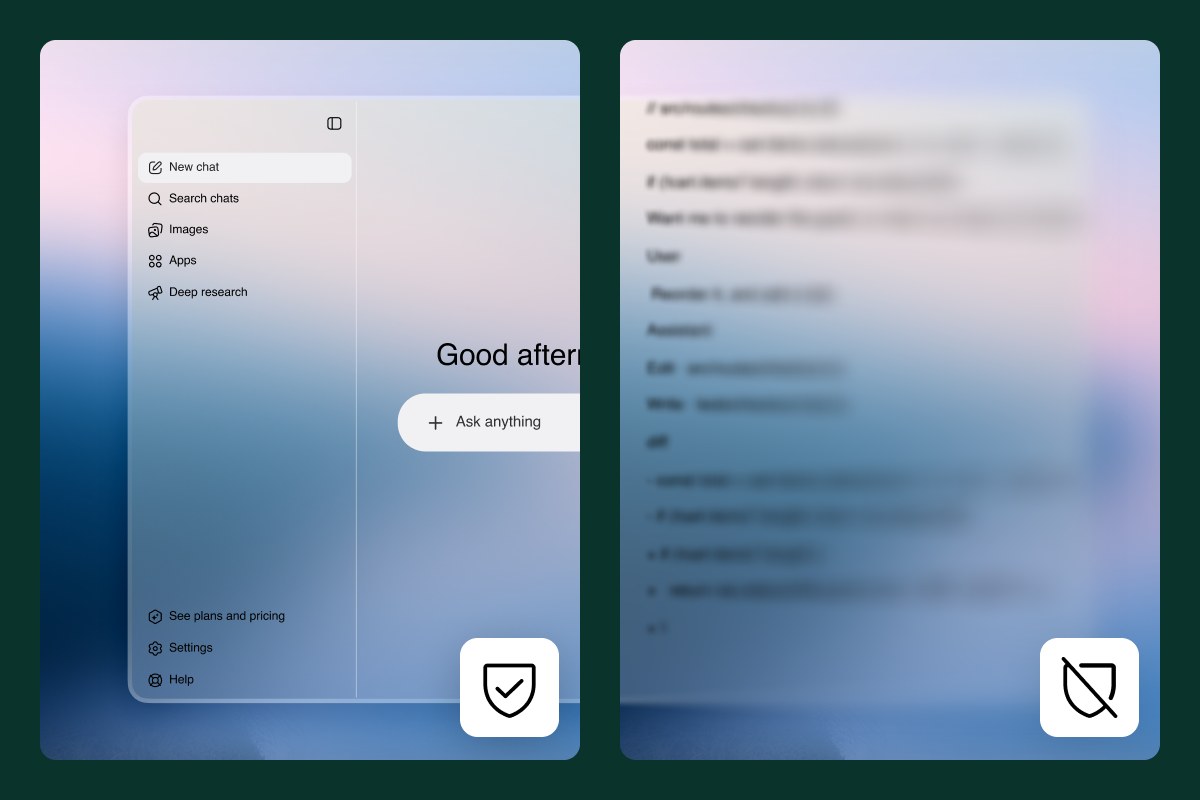
When an agent acts inside an employee's session, most stacks log the employee, which is accurate and not especially helpful. The investigator's first question is "was that you or your agent?" In many environments, nothing in the logs can answer it.
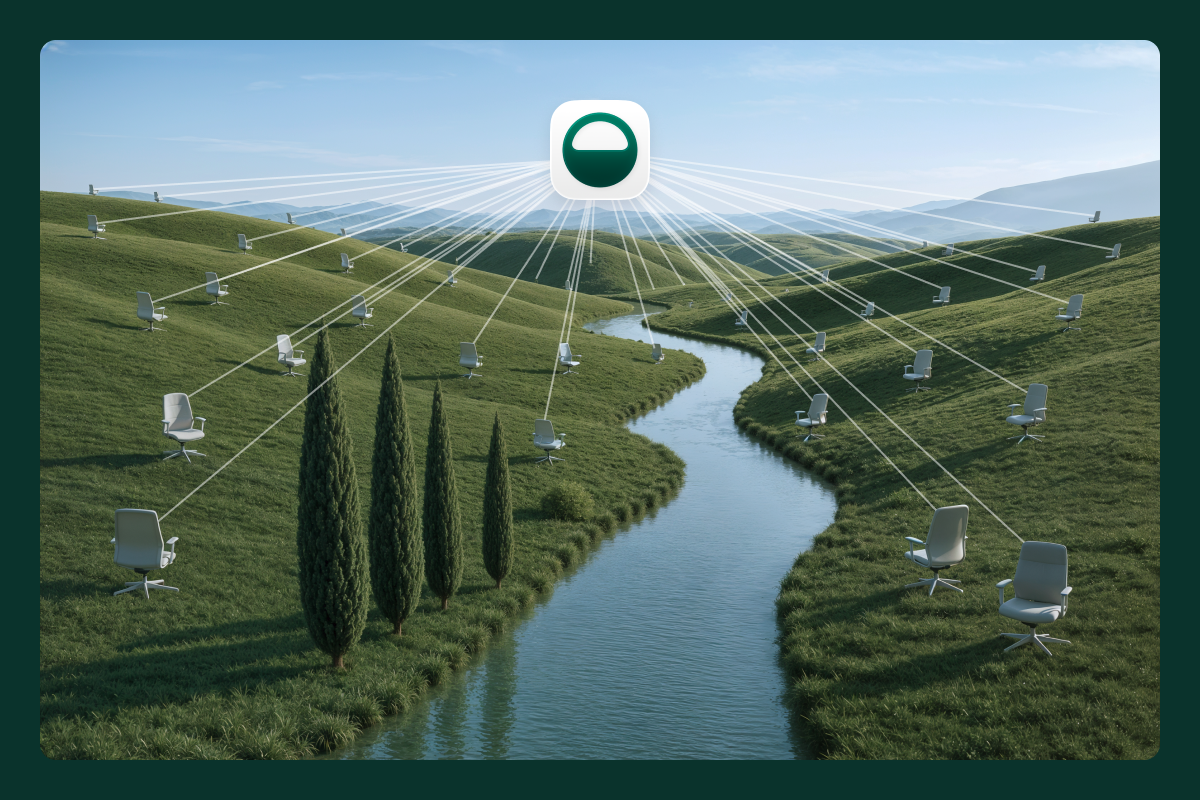
Island builds governance into the environment where people and agents already work, spanning the browser, the desktop, the network, and the tool-call path. In our view, agents are a second workforce that skipped onboarding. The goal is to say yes to them at scale, which means governing them with the same policy engine as the people they work for.
Island Enterprise AI applies a four-stage model across those surfaces, and each stage maps to a distinct capability.
- Discover. Agentic Endpoint Posture inventories agents, MCP servers, skills, and extensions on each device and scores their risk.
- Attribute. Agentic Identity ties non-human identities and agent actions to the identity used and, where possible, the responsible human.
- Govern. AI Runtime Protection inspects prompts, responses, and tool calls inline for prompt injection, jailbreaks, and data leakage.
- Measure. AI Cost and Experience reports usage, cost, and performance per person and per agent, drawn from actual sessions.
The Island MCP Gateway sits between agents and the tools they call. It issues scoped, just-in-time credentials, so the agent doesn't hold the raw key and access ends when the session does.
When a control blocks an agent, Island tells the agent why, so it can self-correct instead of simply failing the task. That detail matters more than it sounds, because governance that silently breaks workflows becomes the reason agents get switched off.
Underneath, the Island Enterprise Platform connects the Island Enterprise Browser, Island Desktop, and Island Network Services to one policy engine and one audit trail. It works alongside your governance and risk software and cloud consoles rather than replacing your system of record. Governance placed where people and agents both work can finally tell you who did what.
Five vendor questions that reveal where a platform's visibility ends
Vendor demos are rehearsed on clean tenants, and they're usually impressive for exactly that reason. These five questions move the conversation into your environment, where placement decides the answers.
- Can you trace one agent action, live, back to the human who launched it? Attribution is easy to claim and much harder to show.
- What do you see on an unmanaged or BYOD device? Contractor and personal-device coverage is where many governance stacks go dark.
- Can you revoke an agent's access mid-session without rotating a shared key? Just-in-time credentials should make this routine rather than a weekend project.
- When you block an agent, what does the agent see? Silent failures push teams to disable controls, while an explained block lets agents self-correct.
- Which agents don't you see? A credible vendor answers this one specifically, and an evasive answer is itself the answer.
Pay attention to how the answers arrive as well as what they say. A vendor who reaches for a roadmap slide on question two is telling you, politely, where its sensors sit today. That's useful information, and it's better learned in the evaluation than in the first incident review.
Run the questions on your own hardware if you can: a developer laptop, a contractor's personal device, and a browser with an agent sidebar open. Then ask for the audit record of the action from question one. If that trail spans three consoles and a spreadsheet, you've learned what you need to know about attribution.
Each answer, in the end, is a statement about where the platform sits.
Your agents already work where your people do, and governance can follow
Feature lists in this market will keep converging, while placement will keep deciding what your AI agent governance platform can actually govern.
If you're evaluating this shift, we're happy to walk through what we've built. Request a demo.
Agents already know where the work is, and your governance should know it too.
FAQs
What is an AI agent governance platform?
It's software that inventories AI agents, ties each one to an identity, enforces policy on what agents do at runtime, and keeps an audit trail. The most useful ones also control cost and cover the devices where agents run.
What are the best practices for AI agent governance in 2026?
Give each agent an owner and its own identity, and enforce least privilege with human approval for high-impact actions. Then keep one audit trail across people and agents, as the six criteria above describe.
How do you secure agentic AI systems and autonomous workflows in the enterprise?
Govern the action path by scoping credentials just in time, inspecting prompts and tool calls inline, and authorizing actions in downstream systems. A model's own judgment isn't a sufficient control for high-impact steps.
Can one platform govern every AI agent, or do you need a composed stack?
Most enterprises pair a system of record with an enforcement point close to where agents run. The comparison table above shows where each category's coverage typically ends.
How does AI agent governance map to NIST AI RMF and ISO/IEC 42001?
The NIST AI Risk Management Framework and ISO/IEC 42001 standard are management frameworks rather than agent-specific controls. A platform's inventory, risk scoring, and audit evidence should map to them, while runtime controls do the enforcing.

Island is defining the future of work for people and AI agents. Its enterprise agentic control plane helps organizations enable, govern, and audit agentic workforces alongside people. Island boosts productivity across devices, browsers, applications, networks, and data while protecting sensitive information, simplifying access, and helping enterprises scale AI safely.