Video
Saying Yes to AI Without Losing Control: Amazon’s Richard Davey on Trust, Friction, and Island
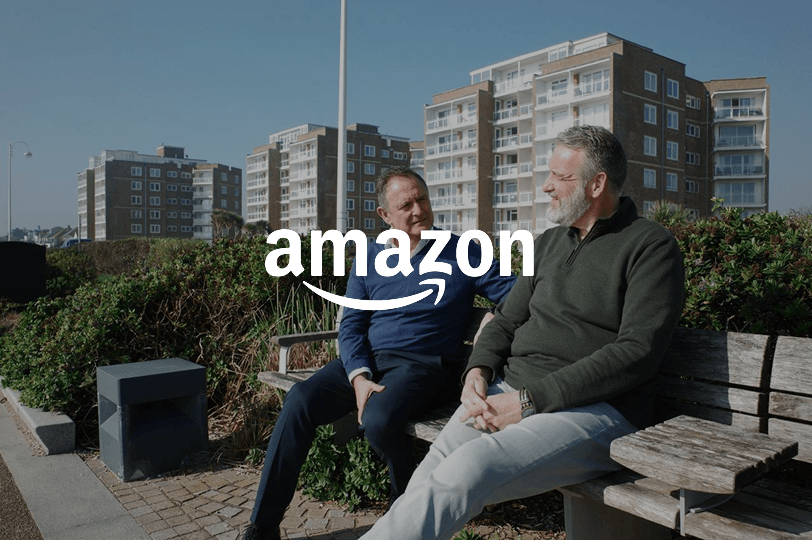
Richard Davey, Principal Security Engineer at Amazon, does not trust AI. His job is to help Amazon use more of it anyway. He explains why saying no is never the answer: make controls a burden and people simply go around them, like tire tracks worn into the grass beside a gate on a country road.
Amazon’s security team uses the Island Enterprise Browser to enforce identity where work happens, see every tool in use, approved or not, and apply controls surgically instead of to everyone at once. People keep a browser they already know, so the rollout stays close to invisible.
Richard also shares how his team uses AI as a force multiplier for high-volume, low-risk work, and why they keep a guardrail ready in front of any agentic action. The result is a security team that can say yes to new tools on its own terms, with the evidence to know where the real risk sits.
“The altruistic goal in security is to raise the bar while lowering friction. In my career, I’ve truly achieved that maybe twice, Island is one of them.”
Richard Davey, Principal Security Engineer, Amazon
Richard Davey (00:00):
I recognised a pivotal moment in my childhood where I learned not to trust technology. There's a device, a toy called a Speak and spell. It was early kind of 1980s popular toy, and it was intended to teach, spell it, but it was developed by an American company and it only had a singular dictionary of words. And I discovered that it didn't know how to spell the word colour, it would just say C-O-L-O-R, colour. And being British, I knew that was wrong and that intrinsic mistrust of technology, I think has served me throughout the cybersecurity career.
Spencer Mott (00:42):
So were you one of these kids that took the radio apart and TV apart and did printed circuit boards?
Richard Davey (00:47):
Absolutely. And sometimes they went back together.
Spencer Mott (00:49):
Yeah, yeah. Question for you. Somebody tells me this might be your happy place. And what is the connection between Richard and Be Hill and Sea?
Richard Davey (01:13):
Primarily family. My parents are here and it's become the escape, the little piece of calm in what for us can be a pretty turbulent industry. So it's relaxing. It's got a character and a personality, all of its own. I love it here. And
Spencer Mott (01:32):
You are working in a company that's renowned for driving people hard and getting the best out of them. So is this the place where you can really switch off?
Richard Davey (01:41):
I build my own boundaries. I think I'm at a point where my role is more to enable others and give them confidence to drive and build their own careers. I'm always very conscious about being available to my teams in an emergency. You occasionally need all hands and where you are and when you are has to take a second place to that. But for the most part, I'm able to carve out some calm in the choppy water suit.
Spencer Mott (02:06):
Yeah, there's something about the British seaside I can't quite put my finger on, but there's something about it.
Richard Davey (02:13):
It's a fundamental part of being from the uk. I think you're never more than 50 miles away from the ocean wherever you are. And growing up in South London, the South coast has a long history of fond memories to me all along the South Coast here in Be Hill Hastings, east Wall, Brighton,
Spencer Mott (02:33):
All of it. Yeah. We discovered today we were born in the same hospital. Right. Kingston Pems.
Richard Davey (02:37):
That is a very small world in
Spencer Mott (02:39):
Separated
Richard Davey (02:39):
At birth.
Spencer Mott (02:40):
Yeah, yeah. Anyway, should we go for a little walk along the promenade?
Richard Davey (02:44):
Absolutely. Let's do it.
Spencer Mott (02:45):
So a little bird told me one of your great interests and passions in life is Formula One. It
Richard Davey (02:51):
Is.
Spencer Mott (02:52):
I also know that Formula One has got a connotation as it relates to Beyl and Sea. Now I would've recognised that with Brooklyns, but I didn't know it about Bex Hill. Can you tell us what the linkage is?
Richard Davey (03:05):
Yeah, absolutely. Bex Hill is ostensibly the birthplace of British motor racing. Behind us is a place called Galley Hill, which was the start point for the formative motor racing in the uk. So that is a tenuous but material connection between Bex Hill and Modern Day Formula One, which really puts together the epitome of the height of technology and puts it in the hands of an individual driver in every race.
Spencer Mott (03:36):
So we're going way back beyond Sterling Moss. We're going back. Oh,
Richard Davey (03:40):
Absolutely.
Spencer Mott (03:40):
So predominantly in those days, mechanical technology. But now Formula One is of much about software and design and how does that correlate with the kind of work that you do because you've got technology wrapped around the driver, you've got a support team that's kind of architecting the race and providing real time feedback to the driver. Is that a little bit what it's like to be a security practitioner nowadays leading a team?
Richard Davey (04:07):
There are a lot of similarities. I think that the risks are very different, but the dependency on technology, the need for observability and sources of signal that give you as near real time ability to respond as possible are very similar and fundamentally for cybersecurity information security, all of the technology, whether it's directly security related or it's the technology that's involved in running the business that is all ultimately put in the hands of humans, the drivers, if you will, of the technology. And so it's important as security practitioners that we never forget that the human element is ever present and a necessary part of what we do.
Spencer Mott (04:51):
And one of the other things I thought of is there's certain things in the race that you can't predict that you can plan for. Like you've got to change tide because it starts raining and that's a big part of security, right?
Richard Davey (05:04):
Absolutely. I mean, strategically tabletop exercises
Spencer Mott (05:07):
Have
Richard Davey (05:08):
Value, you hope for the best and plan for the worst is the mantra. And putting those incident response practises in motion in hypothetical scenarios and continuously exercising, that makes you more effective when you have to respond to those unfortunate incidents that we try to avoid. But occasionally we have to switch from fire marshal mode into firefighter mode and deal with the emergent situation.
Spencer Mott (05:35):
So if Richard hadn't been a security professional, what would he have been racing one racing Formula one driver?
Richard Davey (05:42):
So true story, one of the, my favourite job application rejection letters that I ever got was from the Benetton Formula one team. So I did try and break into that field tenuously a long time ago, but actually before I got into it in general, I was aspiring to go into the movie production industry,
Spencer Mott (06:03):
Particularly
Richard Davey (06:04):
Interested in special effects. And that kind of led the early part of my education until I found I had more affinity for the technology.
Spencer Mott (06:21):
I realised actually as we were coming into this, we got quite a bit in common in terms of not only fact that we're in the same profession, but you and I grew up in South London.
Richard Davey (06:28):
Yes,
Spencer Mott (06:29):
I know you are in the US now. I spent time in the us. Can you just tell me a little bit about how you came into security? I think you came through the tech path, but I'm not going to speak for you.
Richard Davey (06:39):
Absolutely, yeah. I think security found me. It was always a practise of mine to tinker with technology and kind of test out of the possible regardless of what the instruction said. So
Spencer Mott (06:50):
How do you think that's helped you with security, but on the product side? So if you're looking for a solution or a capability, how did that curiosity I guess help you?
Richard Davey (07:01):
I think when it comes to solving problems, the most important aspect is to understand the problem and not just from a technological aspect. Understand it from a business aspect, security teams don't make money is absolutely a cost centre. And so every dollar has to reduce risk, but risk that's meaningful to the business. It's not worth investing in risks that are non-material to the business that. So really understanding the risk posture, the risk appetite of the customer helps you understand the value of the solutions. And then you look at the art of the possible, can I solve this with existing capabilities? Can I build it internally or are there products out there that perhaps solve more than just the problem that's in front of me right now and give me scope for solving other problems.
Spencer Mott (07:48):
Yeah, I think that's a great point. I mean I've always had this criteria. One of them is solves the problem that you originally had in mind, but then the multiple applications to solve multiple problems for different constituents.
Richard Davey (08:01):
Absolutely. It's always satisfying to find a solution that is something of a SOS knife, the problem at hand, and you focus on delivering the results for that, but ultimately there are other problems, perhaps not as high up the priority list that you intrinsically know this solution could be viable for. And you turn your attention back to that as you kind of go down that priority list.
Spencer Mott (08:26):
Everyone's problem is at the top of their list, right? So it's great to have that Swiss army knife as you say.
Richard Davey (08:31):
Absolutely.
Spencer Mott (08:32):
I know one of your first roles was in the third party security space. Talk a little bit about that. I know for me one of the applications, one of the big wins from my deployment of Ireland was with outsource contact centre, effectively take our desktop in a browser to the third party and it was completely abstracted from the risk on their machines that they control to manage Huge win for both CISOs actually that were in the organisation, the customer and the supplier. But yeah, third party security, supply chain security. How do you think about that now?
Richard Davey (09:07):
It's not lost, its criticality. If anything. I think it'ss increasing, it's important that we recognise the use of AI unless it's entirely self-hosted as a third party security risk. I was lucky in the early part of my career, I think to have my first role in traditional third party security due diligence evaluations. And that really forces you to think about not only the business risk and the operational concerns for your customer, but you also have to consider the entire context of the security programme of the vendor that you're assessing. And it really is a balance of understanding where the risks are in that third party provider's security environment and translating that to the potential impact to the relationship. You don't necessarily need to lean too heavily on a provider who has risks in a space that are not material to your business relationship. A good third party due diligence evaluation should be seen by the recipient of that experience as really free security consulting.
(10:16)
You're giving them a roadmap of the next evolution of their security programme. Good relationships function that way at any scale. Large companies, small companies, it's fundamentally the same. I remember a small company that I visited early in my career and it was a very small company family run the C-suite all had the same last name, very welcoming, very pleasant company to kind of interact with as I was going through the process. And I noticed when I walked into the facility, there was a sign on the wall and it said, don't forget the Cinderella rule. And I just made a mental note of that and went through the process and then eventually the opportunity arose to ask the question. So I asked the room, tell me about the Cinderella rule. And when they explained it to me, it told me more about their approach and their understanding of their security programme than almost the rest of the day's conversation had told me.
(11:15)
And the Cinderella rule was effectively that they had had some issues with their facility when the last person who left for the day did not arm the alarm system. And so the first person in the morning would come in and find the place had been effectively unprotected through the night. So they decided to make a modification to the alarm system that it would arm itself at midnight automatically. And so the poster was just to remind everyone, if you need to work late, that's great, but make sure you're gone before midnight because you're going to be locked in if you're still here. And I just thought that was a great way to solve the problem and use a sense of humour to remind people that you need to be gone by midnight. It doesn't matter what you're doing,
Spencer Mott (11:57):
You
Richard Davey (11:58):
Need to go home. And so that told me that they understood the risks, they took action to resolve the risks, but they were mindful of the people at the same time. And that's critical to any good security programme.
Spencer Mott (12:13):
So I think you told me this backdrop is somewhat famous.
Richard Davey (12:19):
Yeah, I believe UK group called Keen spent some time I guess in their youth in this area and they dedicated an album to impart to this area.
Spencer Mott (12:30):
So we're going to cut in a copy of the album cover if we're allowed to. I'm sure. So the age demographic here is, it is known as a retiree kind of place. And we work in an industry, it's pretty much dominated by Gen X, gen Y, younger generation. And I think it's an untapped generation, the 50 60 plus course I would say that. But experience is hard to replicate. And even if it's the role of the mentor or the guide or the coach, I sense it's a hugely underutilised part of our workforce and people living longer, they're healthier. Do you agree?
Richard Davey (13:13):
I think that diversity of perspectives are critical in what we do. I would be the first to raise my hand and say that there are plenty of people that are smarter and faster
Spencer Mott (13:23):
Than
Richard Davey (13:24):
Me at certain things, but my job in kind of the influencing role that I have now is to help them see the art of the possible, help them challenge themselves in the right ways and use their skills to achieve the outcomes that we need to enable business with the right level of risk.
Spencer Mott (13:46):
And the other thing I think security professionals have is have a pretty strong set of values and principles. And not everyone operates in business like that, especially in a big corporation. And you have to deal with all kinds of personalities and some that will get in your way and create barriers or politics. It makes things difficult. How do you manage that
Richard Davey (14:09):
Pragmatically?
Spencer Mott (14:10):
Yes,
Richard Davey (14:11):
And maybe with a little bit of a good sense of humour, humans are human and so they're always going to look for opportunities to be more effective with less effort. And so security controls need to be complimentary to that. We need to anticipate the human element of what we build and recognise that if a shortcut is available, it will be taken. There's some classic imagery that security folks like to lean on in the industry and one of my favourites is the gate across the road that goes through, it's got fields on either side and you can just see the tracks of vehicles going around the gate through the field, no fence, there's just the gate on the road. We can fall into that trap sometimes we get overconfident in building the controls around what we see to control and we're not looking beyond that to see if there's a way around it that will be taken and what we would want to do about that.
Spencer Mott (15:07):
And
Richard Davey (15:07):
So being able to see around corners think around the problem is critical to our profession. And that's the aspect I try to inspire and teach in the teams that I mentor and the people that I mentor because as we said previously, skills can be learned,
Spencer Mott (15:24):
Training
Richard Davey (15:24):
Can be had, but mindset and approach to the problems that face us is critical.
Spencer Mott (15:29):
And I think we're surrounded by technology, but still so much of it comes down to relationships, the ability to influence, sometimes there'd be the ability to cajole, but just thinking on the solution side of things, vendors, suppliers, et cetera. You and I have encountered many different folk sales teams, et cetera. And there's a big difference between someone that feels like a partner versus someone that feels like they want to cut a check with you. And I brought us together today and one of the experiences I have with that company and why I advocate for them is the discussion always started with, Hey, tell us what a day in the life of Spencer looks like as A-C-I-S-O and what challenges you're up against and let's just have a discussion, see if anything fits. And then extending that discussion and say, oh, actually yeah, we've got a need for that and that and that. But it was the personal interaction, not the half sell, the incremental, let's build value and the real kind of immersive way that the product was exposed to me and the team that was part of the attraction. And is that something that's kind of important to you?
Richard Davey (16:45):
Absolutely.
Spencer Mott (16:45):
Tell me about that.
Richard Davey (16:46):
As much as we have to recognise that security is itself a customer service organisation, when you've put in the effort, you've worked with your internal customers, you understand the problem space, you've thought around the threat model, you understand kind of what you need that solution to look like. When you start to look for how you might build or if there are existing products available to solve that problem, you then transition and you are now the customer. And that is very much how I felt treated by all of the companies that I've dealt with that have had the solutions that are most aligned with my needs. And Island has been very intentional about listening to those needs and responding to them if necessary, very much supported. And it doesn't hurt that the product itself fits that we talked about earlier, that kind of natural familiarity of the customer and gives us that balance of observability and control that it can solve ultimately many more problems than maybe the initial one that brought us to it.
Spencer Mott (17:50):
And I think companies that have a strong engineering core and as they evolve, they don't deprecate that, they keep that as the foundation. So the ability to build features, take customer sentiment and translate it into solutions. And then the very important relationship between the sales person and this engineering support because the demo is no good if you can't go deep, right? Some just want to go deep and that can get lost sometimes as companies evolve and they stop doing the engineering and then just focus on sales.
Richard Davey (18:19):
Yep. No, that's definitely not the experience we've had with Island. Island has a very clear relationship between the front end sales team and the engineering teams and very responsive to feature needs and requests and is always quick to turn 'em around and evaluate them with us as well.
Spencer Mott (18:40):
What are you seeing and what are you kind of worried about? What
Richard Davey (18:43):
Am I worried about? I'm worried about complacency.
Spencer Mott (18:47):
Yeah,
Richard Davey (18:48):
I'm worried about assumptions. Insecurity assumptions are probably the most dangerous thing that we can invoke is assuming that we've got all the controls in place, assuming we know what all the risks are, AI is going to be a false multiplier. And I think at the foundational I talked about the high volume, high velocity, low risk functions, AI can take on a lot of what we used to depend on humans to do in analysing large volumes of data. That's where it excels, where it performs less well. And particularly in high risk environments where context and high judgement is important, that's where AI starts to be less dependable. And so what we really need to do is use AI to raise the bar on how we're using the security workforce, particularly in the context of a security operation centre to help them focus their skillset, their judgement on contexts where the risk is more critical. One of the fundamental assumptions that I'm always trying to educate teams on is just because you see it happening consistently doesn't mean it should be happening. And just because it's an anomaly or it doesn't happen very often doesn't mean it's unexpected or on a permitted action. I think with AI we could become dependent on something that's going to jump to those same assumptions that AI is going to say, I see this all the time, it must be good.
(20:20)
It might not be, and the context may matter. And so being able to surface that, get it in front of the SOC analysts and have them make those high judgement calls is going to be critical. So yes, AI is going to be a powerful tool. It's going to change the way we operate the way business operates, but foundationally we need to be cautious about the same things like making assumptions and allowing patterns to dictate actions.
Spencer Mott (20:47):
You talked about taking things apart and understanding how they work, and the driver for that was, can you trust machines a system? Do you trust ai?
Richard Davey (20:57):
Not at all.
(21:00)
It is fundamentally just putting my information on someone else's computer and then hopefully reaping some benefit from computer generated output, the mechanisms, the tokenization, the models, the training data that built the models that may be fundamentally different, but functionally I'm putting my data in somebody else's computer and getting an output. It used to be the input validation was the big control aspect and making sure there weren't SQL injections or cross site scripting coming into your solutions. And now we need to be really purposeful about not only what information is being generated and coming out of ai, but as we think about the evolution of age agentic capabilities, it's what actions are we allowing the AI to take on our behalf and sometimes in an unmonitored manner and think through what is the extent of those actions that could be what do I need to see and anticipate happening in case I need to drop a guardrail in front of a potentially damaging action in real time? And so those are the important aspects of really partnering with the teams building AI solutions.
Spencer Mott (22:07):
Can you talk a little bit about structure and why those fundamentals are still very important? Even in the world of AI and geopolitical chaos, still we end up coming back to structure process fundamentals as the foundation.
Richard Davey (22:23):
So fundamentally knowing who is doing what with what and where is everything you need for observability in the security environment and then understanding that you can interpretate the risks and decide what controls either existing or novel that you need to reduce that risk.
(22:40)
A solution like Island allows you to do all of that within the most common interface between your workforce and a lot of what they're using, which is the browser. There are other mechanisms that they can use, but the browser is one of the most active places. And if you can enforce identity at that point, then you've got confidence in that aspect, that fundamental, and then you can observe the interactions with the tools regardless of what the tools are, whether they're approved or unapproved, if there can be accessed through the browser, you can see happening and then you can learn about those patterns. And then within that browser, within the tooling that is available in a solution like Ireland, you can then begin to apply controls and you can do so surgically. You don't necessarily have to apply controls that affect everyone all at once, which can have very painful operational impacts. You can test and learn. Being able to do that within a single tool is powerful for security organisations that are already scrambling to anticipate and get out in front of all the risks for all of their customers.
Spencer Mott (23:46):
I think that's an important point. And one of the things in terms of the suite of capabilities within Ireland is yes, it's a Swiss army knife model, blades and tools, et cetera, but you have the ability to bring your own tool as well and add that to the suite, right? And it probably compliment the overall package because you might get the question why is it an either or, do I need sassy as well as island? Well maybe or maybe they'll work together. So there's power in that as well. But I think the power of island is you get so much that the only limitation is really around your imagination and where to apply it because it's enterprise grade browser security that's been designed for the enterprise administrator effectively with all the other benefits as well. In terms of what we just talked about, about innovation, et cetera, and then the fundamentals being in place as well off. When you're here without me and you're sitting here on a day like this and just clearing your head and you're not in the chaos of work, what are you thinking about? Do you think about work? Do you think about using that time to think about could I be doing things differently or do you completely switch off?
Richard Davey (25:01):
I think the challenging yourself to retrospectively to see what you could have done differently is a good personality trait for this career field. So I tend to do that probably more than I should most of the time. So when I'm here and I'm enjoying all types of weather walking along the front here in Bex Hill, I try to think as little as possible. I just enjoy the nature and think about the enormity of the ocean and the fact that there is nothing that influences the ocean. The ocean influences everything else, and that can sometimes be the experience we have with information security
Spencer Mott (25:38):
That
Richard Davey (25:38):
We're an island in the ocean. But ultimately I think the most rewarding thing is those days when nothing happens.
Spencer Mott (25:46):
And I guess that sense of proportionality and putting everything in its place is part of the foundations that we touched on earlier. I mean, I used to say for a long time to the team, look, we're not in the business of saving lives. And then I went to work for farmer and that didn't work anymore. But no, in all seriousness, you have to put things in proportion, right? I mean the world doesn't stop because we make a mistake or something happens and we're dealing with it and we maybe take a wrong path. But I find that SC professionals are very, very connected with the work, very set themselves a high bar and think the consequences, and they are serious sometimes, but how'd you take the team out of that kind of stress and anxiety, which seems to always exist. It is waiting for the next big thing to happen because always on a Friday afternoon it does.
Richard Davey (26:39):
Absolutely. It is always on a Friday. I think that the critical component is recognising, as you said, that that's a part of this profession. It is not about risk elimination. Sometimes I think we'd like to think that it is, but the reality is it's about balancing risk with effective delivery. And the key is recognising as you said, that risks that are taken can be realised. And being very intentional about how you respond, responding, not reacting and learning from those incidences. Every issue or incident is a learning opportunity and it makes us stronger. So things will happen. Hopefully we're smart enough and wise enough to see around corners and anticipate the more impactful issues and be prepared for them or have mitigating controls in place to reduce the scope of that impact. But when it does happen, you respond, you learn, you move on and you get better.
Spencer Mott (27:41):
So we've been doing a lot of talking. My mouth's pretty dry. Why don't we go and get a cup of tea?
Richard Davey (27:45):
Absolutely. Perfect.
Spencer Mott (27:46):
Sounds good. So here we are enjoying cup of tea. I pretty much suspect that you are the kind of person that thinks about when the tea leaf was picked or bag it went in, how it got transported over the tion process, boiling the kettle history of the history of the Eastern India company. Exactly. I know you were involved in quite a few activities and I know it's something you're passionate about. Can you speak to what you're doing and your philosophy around why it's important?
Richard Davey (28:22):
Having been in this space for the bulk of my career and now I am passionate about the outcomes, about how meaningful it is to enable companies to achieve their goals and in ways that lower the risk, improve their efficacy and their effectiveness, and ultimately protecting the trust that customers implicitly place in them. It's important for us to replace ourselves with people that share that passion and share that perspective and bring the right skillsets and mindsets to the table to continue to serve the business internal customers that we have. And doing that, as we talked earlier, a little bit about the balancing of certifications and academic interests. He's really got to foster that interest. And one of the things I'm quite passionate about is the
(29:13)
Security conferences. I run BSides, San Antonio, and it's a way to create a friendly hyper-local environment for experience security professionals and those that are perhaps just curious about the industry and the career field to come together and share experiences and insights and meet each other and network and learn from each other. And it's such a rewarding experience to be able to do that. And it gives me a place to ensure that we're putting the right information, the right content in front of the right people so that the next generation of security leaders can gain the confidence they need to continue to drive their own careers.
Spencer Mott (29:53):
Yeah, terrific. I mean for people that Dunno, B sides just the headline of what it is.
Richard Davey (29:58):
It is a hyper-local all volunteer run security conference. So the most notable ones, maybe RSA, maybe Defcon and Black Hat, those are large and they have for the most part a fairly high bar to the content and the presentations. BSides tends to be very much more regional. Most cities of any reasonable size will have their own BSides and being all volunteer run, it's a much more forgiving environment for those that are perhaps looking to put on their first presentation of what they've learned or their experiences in cybersecurity and a very safe space for people who are interested in the career field to come and learn more and really feel out themselves as to whether or not it's a good fit. So I find it very rewarding. It's good to see people coming back year over year and really enjoying the experience and many of those are going on to develop their own careers and that's equally as satisfying.
Spencer Mott (30:56):
Yeah, that's great. So graduates, school leavers, but also people that are pivoting in their career, right? Absolutely. They want to do something different later in life. So much of our job is implementing technology that's almost invisible or seamless to the, we use the word end user then we use horrible expression, but we know what we mean by that. Island's a bit like that in the sense of we are providing an experience that's familiar, so almost invisible, but there's a lot we can do. We can brand the browser, so it looks like company portal and behind that is all the capabilities that we can keep adding and adding and adding that are just part of the suite of solutions within. So I guess the question is how important is that? Is that in the deployment and implementation process, does it make it exponentially easier to deploy if it's almost invisible to the end user? Or do you look for something that says, wow, I've just noticed that increasing my productivity at 25%? Or is it a little bit of both?
Richard Davey (31:59):
It's absolutely a little bit of both. I think first and foremost, you have to be very mindful of the impact to the customer, mindful of their operating model, how they need to conduct their business. Obviously using a browser is a very natural and familiar thing. You can start with very strong observability and very limited control. So you are not impacting that customer experience. And then you work with the customer to dial up the control where it's necessary. And there may be places where you need to introduce additional friction, but you can be intentional with that, especially with a control environment that's embedded in the browser. You have the ability to apply that very intentionally and dialogue with the customer is important as well. Let them know that your priority is their goals and that you are just trying to work within their risk appetite to help them be as effective and safe as they possibly can.
Spencer Mott (33:05):
Yeah. One point you raised is this natural tension between usability and control. Can you speak a little bit more to that?
Richard Davey (33:12):
Absolutely. I touched a little bit on the nirvana of being able to lower friction and raise security. Good security should be largely invisible
(33:23)
When a customer experiences friction, it should be understood, it should be, I know why this is happening and I understand that I'm getting the benefit of elevated security because of that. And I think for the most part we strike that balance. But if it becomes onerous, if it becomes tiresome, then at scale, your user community is going to get creative in ways of reducing friction for themselves. And I talked earlier a little bit about the potential for creativity to leave your perimeter because someone finds something that is easier for them to use outside your control environment. If you make your control environment too onerous, then you're going to force your customers to get creative and then you lose observability. Your controls are less effective and the risks that you're trying to mitigate are essentially put back. So you always have to be mindful of what the customer's desires and aspirations are, what their key operating models are, and try to build security controls that enable that. Or if there is a risk trade off to be had, then have some very intentional conversations with your business partners about what the risk appetite is and find that middle ground that balances the control environment with the operational efficacy of the customer.
Spencer Mott (34:41):
Yeah, it's that sly hand that could security leaders have the techniques to do that can't quite be replicated yet by ai. I've learned one of the easiest ways to extract all the oxygen out the room is to walk into a team of engineers and say, right, we're going to do shift left. Absolutely. But you have to do shift left ultimately to build in security early up in the funnel.
Richard Davey (35:04):
The biggest hurdle I think in deploying a solution like Island is convincing people to switch from their favourite browser to the new one. Extensions and plugins can help kind of bridge the gap there, but it is very convenient for your customers to just continue to do what they've been used to doing. And again, if you're being very intentional about how you roll out the controls and the guardrails and the friction, the initial implementation is invisible to your customers for the most part. They just keep doing what they're doing while you are getting the elevated visibility into the behaviour. So you can develop more targeted controls. If you are able to reduce friction and raise a security bar, that's much, much more value from your customer because you're literally saving them time, you're making them more operationally effective, and they can focus on doing what they do best, which is run their business and create great products.
(35:57)
So when I think about some of the rough edges of security, such as the occasional dependency on external credentials to access services that you use on a regular basis, if you can use something like the browser to take control of those credentials, reduce your exposure to social engineering to account takeover risk, but then turn that into something that enables your customer to continue to access those services, maybe even introduce the concept of ag agentic and AI assisted process automation on services that may not offer that natively, then you're achieving that outcome of reducing friction for customers, raising the security bar and maybe even making them more operationally effective. And Island has brought those capabilities to the table.
Spencer Mott (36:46):
So you and I have built and bought a lot of security over the years, more years than we care to remember probably. But I have a criteria for what I like to buy. It's got tick boxes and one is ease of deployment and then ease of adoption. One of the things that attracted me in Ireland is this, a very natural experience interacting with a browser, but behind the curtain of the browser are all these security controls. Why do you think ease of deployment, ease of maintenance and ease of adoption, why are they important to you when you're looking at maybe buying a solution as opposed to building one?
Richard Davey (37:24):
There is an altruistic goal in
(37:27)
Security. It's one that in my career I've probably only been able to truly achieve maybe twice. And that is the ability to raise security for your customers at the same time as your lowering friction for your customers. Usually in our environment when we talk about guardrails and controls, it comes with some trade off in terms of increased friction for the customer. Think of multifactor authentication as an example, right? I am used to putting in a username and password, but now I've got to do some other thing and that's adding time and steps to what I do. So when I think about control environment and an observability tool that is built into a browser, your entire workforce has been trained to use browsers forever. And so it is entirely natural for them to use a browser. When
Spencer Mott (38:15):
I ask you about talent, just quickly on talent, so what you look for now when you're hiring, so you have a choice between I guess people who've been through the academic route and then there's people that have been on maybe a little bit more resilient, been more life experience, et cetera. You probably need combination. What do you look for?
Richard Davey (38:35):
It needs to be a blend. Your security team is only going to be as useful as the diversity of the perspectives that they bring to the table. If everyone's thinking the same way, you're going to have a very singular approach to problem solving. As I think back on my career, one of the best hires I made was someone who had almost no cybersecurity or even very limited technology experience. They were career law enforcement. So they had dealt with guards, guns and gates basically. And they had found themselves with the opportunity to find the next step in their career. They had taken on some technology classes at a local facility that was offering that. And
(39:16)
When they interviewed, the thing that came across immediately was how they thought about risk and how they thought about the breadth of risk. The situation that they shared involved both real and present concerns for a workforce that was essentially armed on a daily basis and the need to manage a situation where those folks were going to have to look for new jobs. And that story told me that this individual really knew how to think deeply about risk. That mindset is critical to security skills can be taught, and let's face it, in today's environment, skills are ageing out quicker than we can learn new ones. And so I lean on a philosophy that was helped by Jean Krantz, who was the Apollo flight director, famously on Apollo 11 and Apollo 13, and his philosophy was very simple. He said, hire people smarter than you and learn with them. And so when I think about that term, hire people smarter than me, I want to hire people that are better than me at thinking about security risk and then the skills. We'll learn that together because we'll probably be constantly learning new skills together. But mindset is critical for security. It's really looking at the world and not trying to understand how it works. It's looking at the world and really trying to understand how it breaks.
Spencer Mott (40:44):
So keeping on the mentoring and teaching and educational theme, how'd you create the space and it's important for you professionally to keep up to date with the latest trends, the latest technology, the latest threats. I mean, you name it, there's a lot to cover and yet still work at a very high energy company like Amazon.
Richard Davey (41:05):
It's definitely a balancing act.
Spencer Mott (41:06):
Yeah,
Richard Davey (41:06):
I think part of it is recognising the wealth of talent that is around you and finding ways to learn with them. When I think about risk and the acumen about understanding risk and the many layers of risk, I tend to watch and read a lot about disaster investigations of any nature, not necessarily technology related, whether it's mechanical engineering, oil fields, aircraft, nautical problems. The idea there is to constantly be reminded of the many facets, the many missed opportunities to avert disaster. It's never just one root cause.
Spencer Mott (41:46):
It's
Richard Davey (41:47):
Always a sequence of events that lead to the disaster. And we need to bring that understanding and that mindset to our profession and recognise that where we place controls is equally as impactful to our customers and to the outcome of risk mitigation as the nature of the control itself. And we need to constantly balance that while we focus on enabling the business.
Spencer Mott (42:10):
Richard, I thoroughly enjoyed our conversation. Likewise, we carry on talking for sure. Now that we've got to know each other and we realise we're so closely through birth. Indeed. Yeah. What advice would you give to someone entering our profession today? Do
Richard Davey (42:27):
It.
Spencer Mott (42:27):
Yeah,
Richard Davey (42:28):
Absolutely. First and foremost, do it. If you're even remotely interested, then do it. Learn more. Find what makes you happy. One of the challenging aspects for me personally in my career in this field, and then that I see in others and I help hopefully help mentor 'em through it, is the recognition that every security risk decision is really a business risk decision. And we serve customers who are really smart at running the business that they're in. And we shouldn't second guess that we really have two jobs that are necessary to support that customer. The first is to be the best in the room at articulating the technology risk in a way that translates it to the impact to how the businesses work. Well, hopefully, if we've done our job drive informed business decisions about what the risk appetite is, what the risk priorities are, our second job is to be the best in the room, mitigating those risks that meet the intent of our customer's, risk appetite with hopefully the minimum level of friction. As I talked about earlier in my career, there's probably only been a handful of times where I've been able to raise the security bar and at the same time reduce the level of friction or maybe increase efficiency.
(43:46)
That's the nirvana. But I think being intentional about learning how to understand that, recognising that you won't always agree with that business decision, but it is nonetheless a business decision. And that's probably the hardest part for people new in this career field to stomach and process, is that you may want to make every risk go away, but this is not a risk elimination business. It's a risk mitigation business. And the job is to understand how to do that in a way that helps your company be successful in a purposeful and intentional way.
Spencer Mott (44:24):
So you're stranded on the desert island. What would be the one thing that you'd want with you apart from Speak and spilling the Screwdriver?
Richard Davey (44:31):
Any book probably that you were talking earlier. I think with a historical connection to this area, probably Milligan's War,
(44:41)
Spike Milligan being a comedian of Note from this area, he was actually stationed in the Second World War here in Becks Hill on Galley Hill. But it is the ability for him to experience what he experienced being in the artillery and in the Second World War and yet bring a sense of humour to the table is probably a book I find myself going back to frequently. And it resonates with me. And not that I'm trying to equate what we do to fighting immaterial battles, but it is absolutely a place where we are always on the defensive and we have to internalise the wins and the losses and focus on continuing to move forwards and do so with hopefully good humour.
Spencer Mott (45:30):
So do you know what's written on Spike Milligan's gravestone?
Richard Davey (45:34):
I know it's not written in English, but I believe that the translation roughly equates to. I told you I was ill.
Spencer Mott (45:41):
I
Richard Davey (45:41):
Did.
Spencer Mott (45:42):
Thank you.
Richard Davey (45:43):
Thank you. Pleasure.
Take your next step.