Island Enterprise Vibe Publishing
Code with vibes, publish with confidence
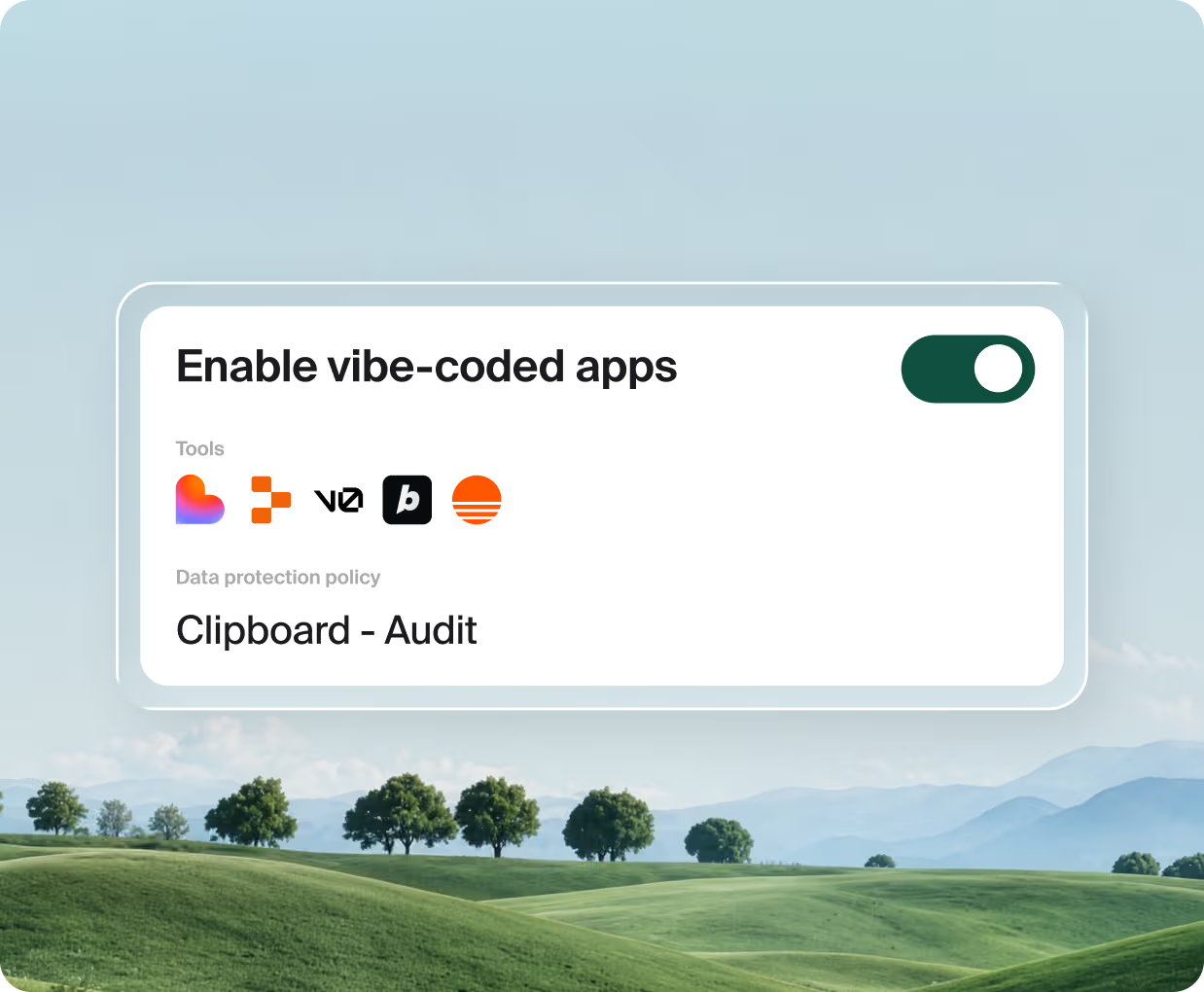
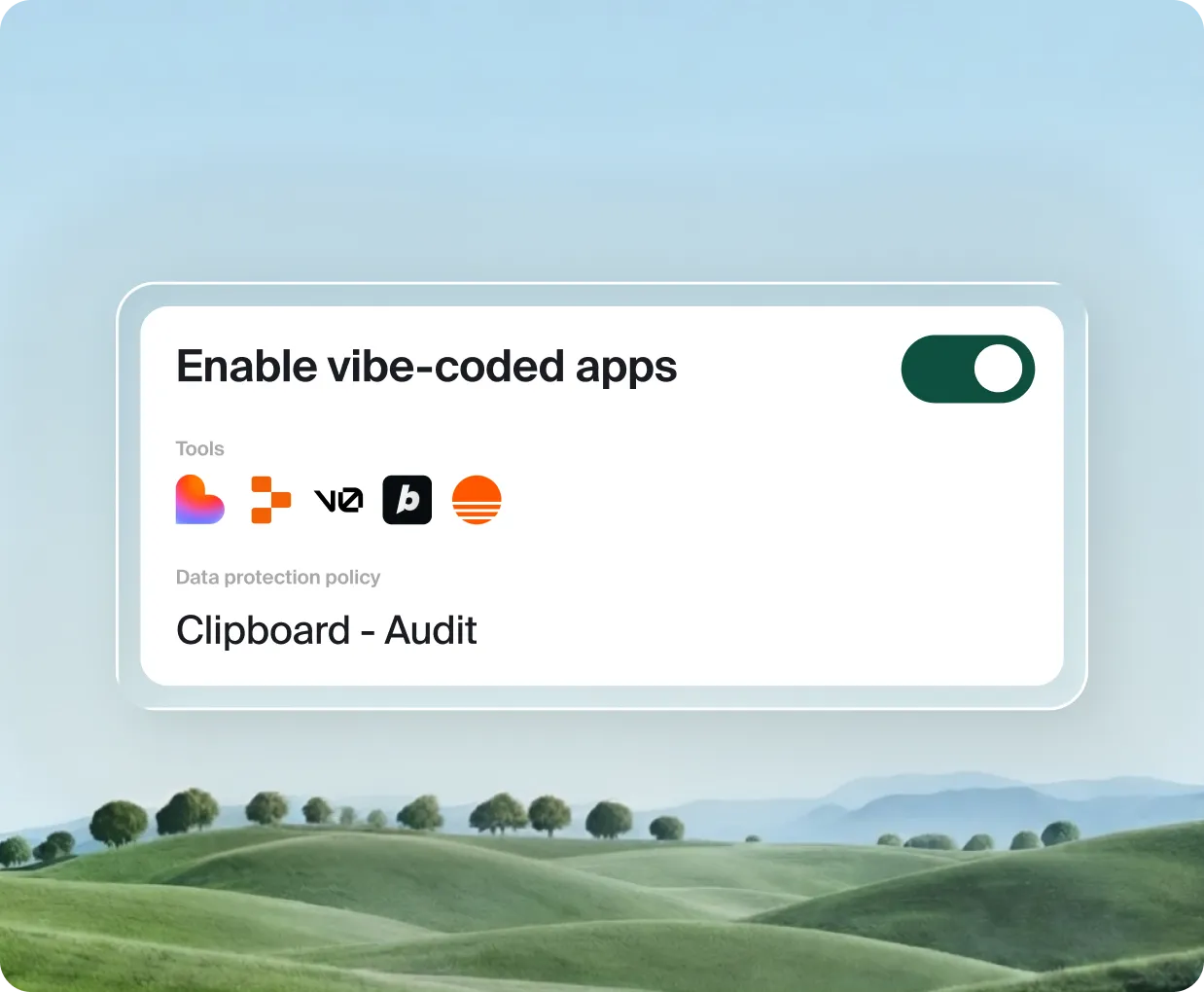
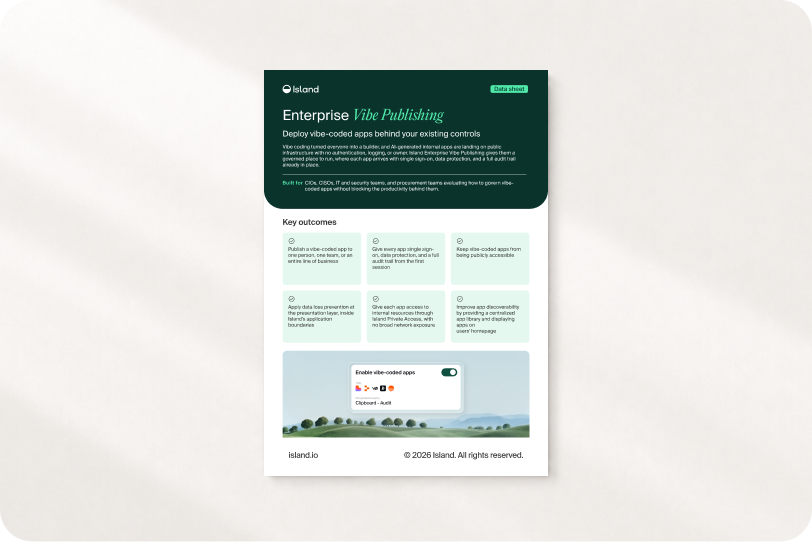
Vibe coding turned everyone into a builder. Island Enterprise Vibe Publishing gives these apps a home inside Island, so each one arrives with single sign-on, data protection, private access, and a full audit trail.
The world’s leading enterprises run on Island.
.png)
.png)
.png)
.png)

.png)










What happens when everyone can build?
Vibe coding tools produce a working app in minutes. The review process was never designed for that pace.
People circumvent policies that get in the way
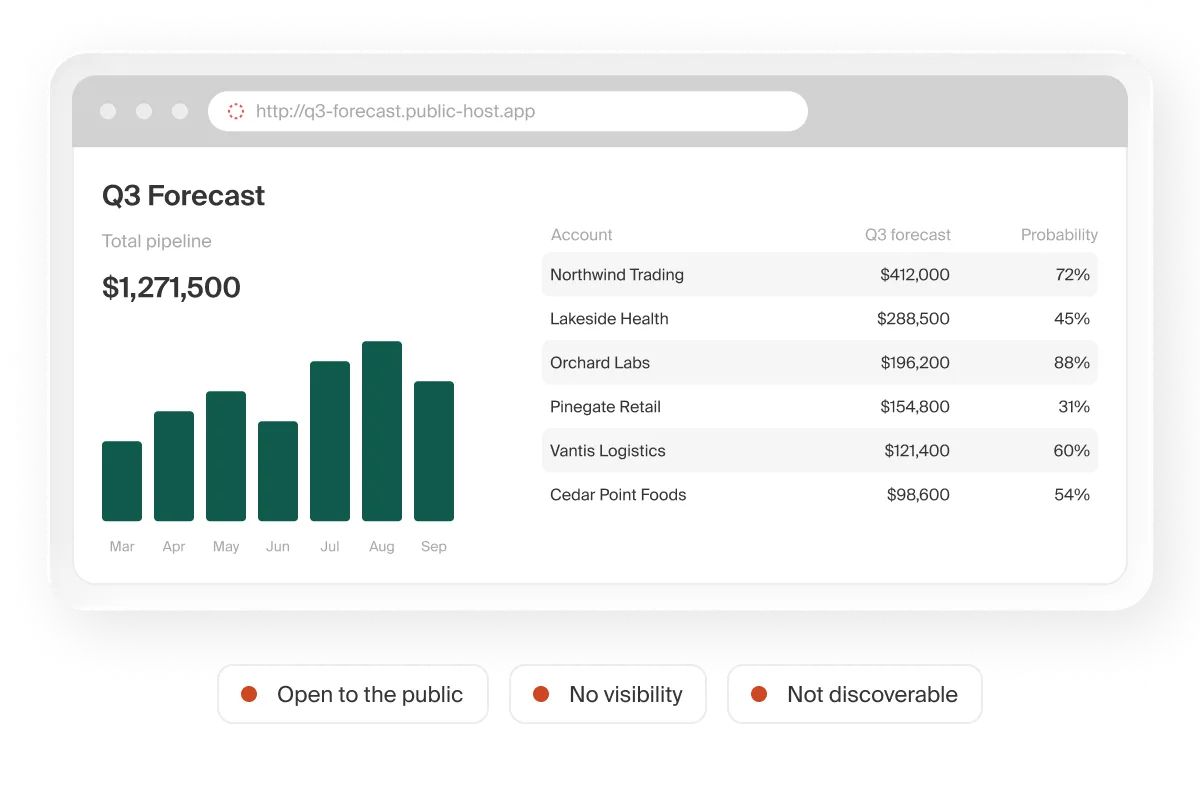
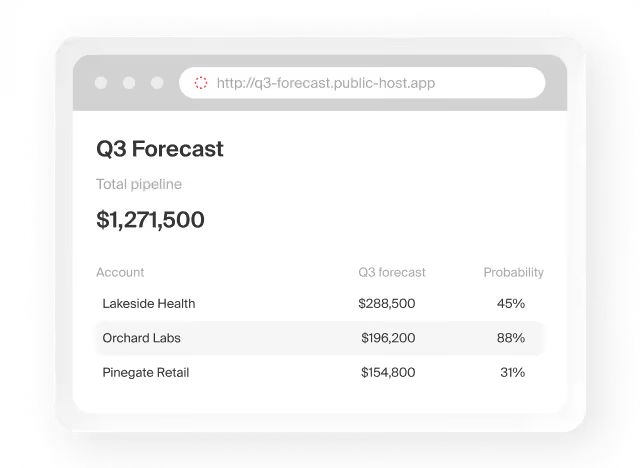
Users push their apps to public infrastructure with no authentication, no logging, and no owner. Then they give these apps access to internal resources, customer records, and other sensitive data.
Everyone is a builder
Someone with no engineering background can describe an app and have it working in minutes. They build for themselves, for their team, or for a single task.
The review gauntlet cannot scale
The software development lifecycle and app review process was built for a few apps a quarter. This creates a bottleneck that cannot keep up with the large volume of vibe coded tooling.
Most of these apps need the same things
Vibe-coded apps are often internal tools, which means they need SSO, access controls, data protection, visibility, and audit trails.
How it works
Publish directly from the browser, admin reviews and applies policy, then the app is distributed via a centralized app library. The app carries identity, access control, data protection, and audit before the first user opens it.
Build the app
Using Claude Code, Lovable, Cursor, Replit, or any other AI app generator, and publish directly from the browser.
Admin reviews
An Island administrator reviews the app in the management console, applies the correct policies to the app, then approves it.
Publish where work happens
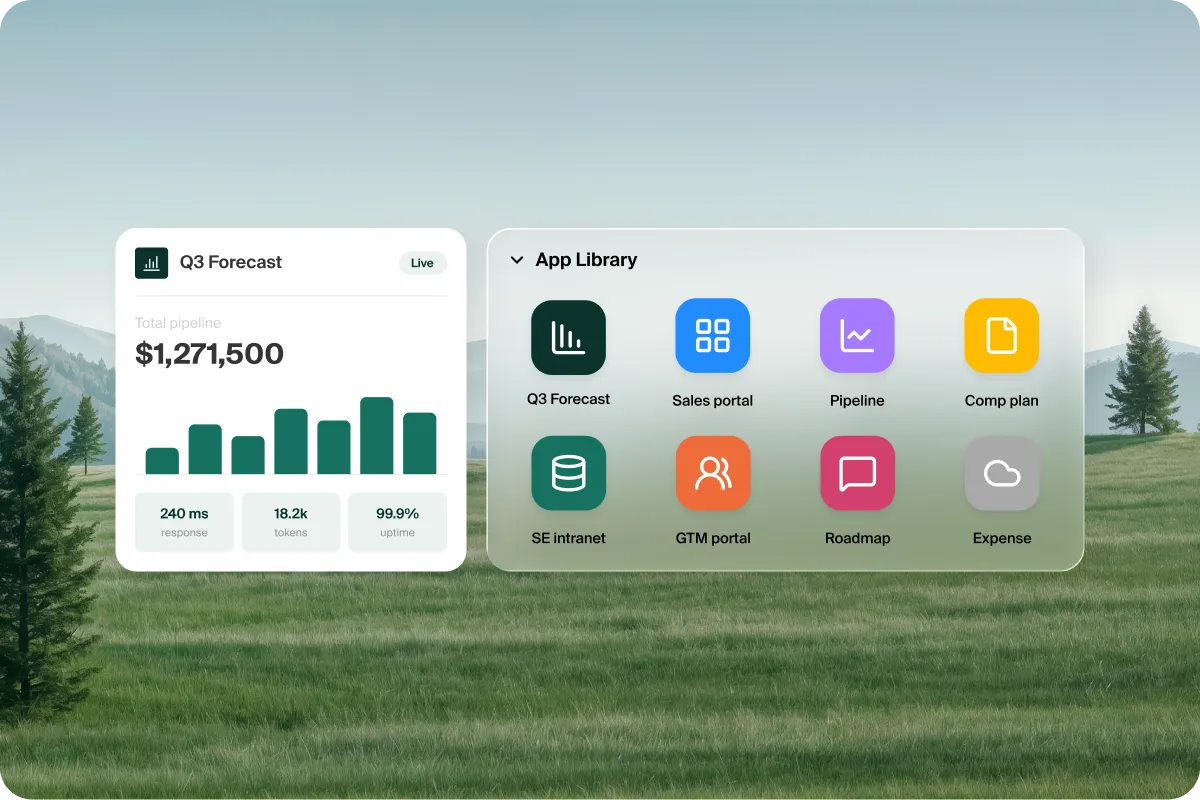
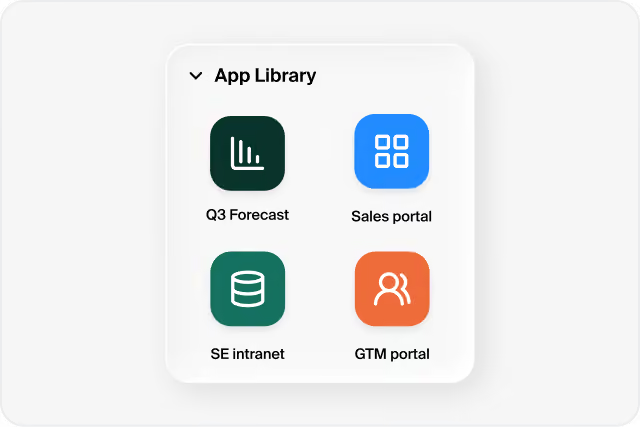
The app then appears in the company’s app library, homepage, and a browser sidebar for every user entitled to it.
Vibe-coded apps, now enabled
The app runs behind Island, which means it is automatically published, immediately discoverable, gives access to private resources, and monitored with digital employee experience (DEX).
- Automatically published to the correct audience
- Publish to one person, one team, or an entire line of business
- Browser enforcement ensures policies cannot be circumvented
- Identify performance problems, excessive token usage, and outages
Vibe-coded apps, now secure
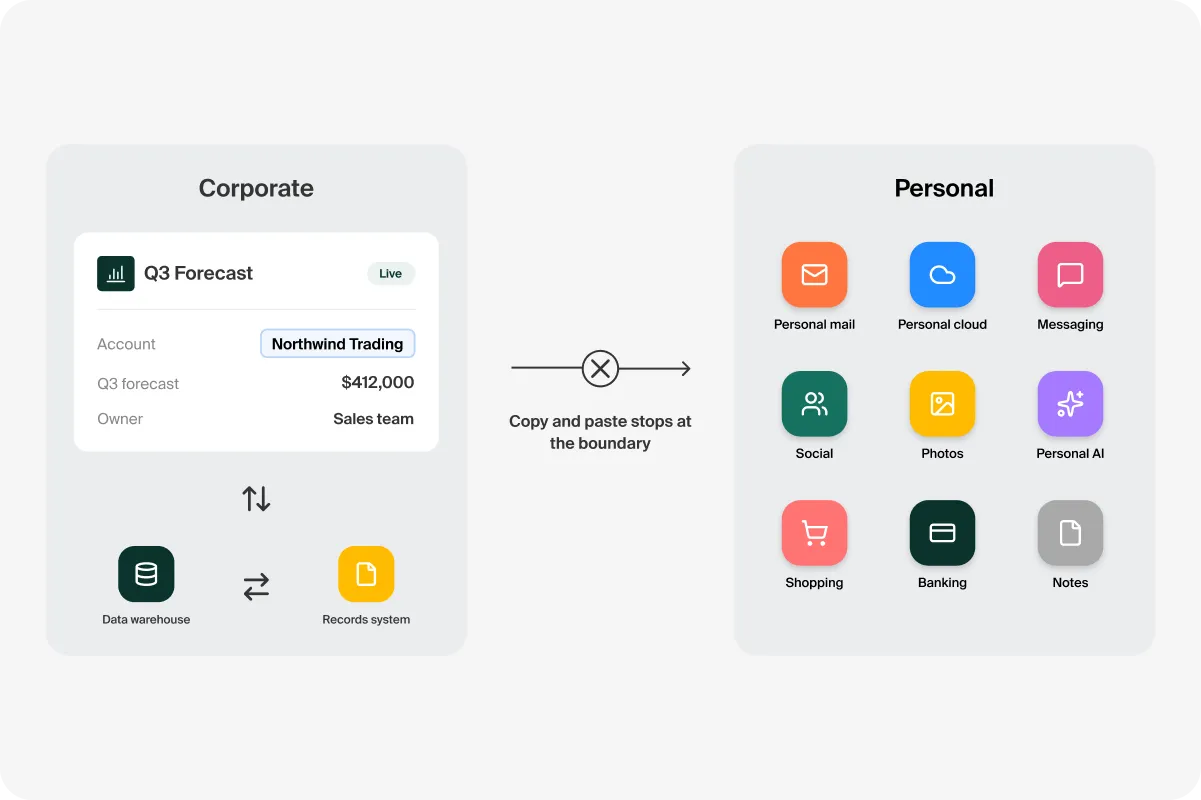
Island applies the same protections, controls, and visibility you are used to. Your team reviewed Island once. Every app published inherits that work.
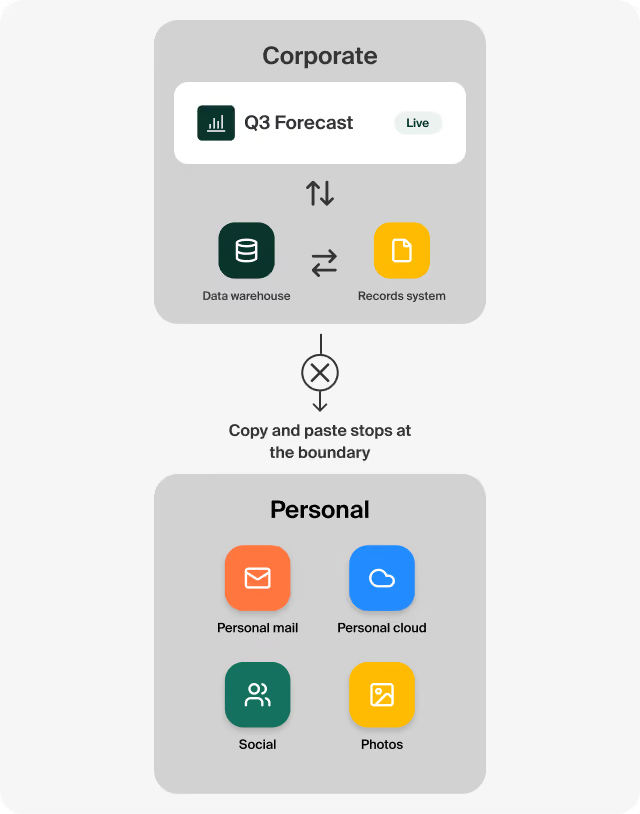
- Company data stays inside Island's application boundaries
- Data loss prevention applies at the presentation layer
- Browser enforcement ensures policies cannot be circumvented
- A complete audit trail is retained, with user identity and context
See every app published
Know what each app does, who built it, who uses it, and where it struggles.
Users publish themselves
Users build with Claude Code, Lovable, or any other AI app generator and publish directly from the browser.
Every app in one place
All apps are published in a centralized app library, on the homepage, in the sidebar, and in the control center.
Complete admin control
Administrators review all apps, apply policies, and have a complete audit trail of app usage and user actions.



"We give employees the sandbox to build, and Island gives us the secure wrapper to deliver those AI apps safely across the enterprise.”
FAQs
Vibe coding refers to using AI coding assistants to build software quickly, often by non-engineers. This technology has revolutionized software development, particularly for internal apps. While vibe coding platforms provide SSO and basic security controls, they lack a scalable way to distribute internal apps to employees, enforce device posture, and apply advanced security controls, such as permission models, data protection, auditing, and threat detection.
Island Enterprise Vibe Publishing is a governance and productivity solution that allows users to distribute vibe-coded apps to their coworkers with the visibility and controls that enterprises need. Users submit apps, admins review them, apply policy, and approve them. The app then gets published to a centralized app library, allowing users to easily find and discover internal apps.
No. Users just need to know how to operate a vibe coding app, such as Lovable, Claude Code, etc.. Submitting the app to Island Enterprise Vibe Publishing is as simple as filling out a form.
When an app needs to reach an internal resource, Island Private Access provides a governed path to that specific system with no broad network exposure. The app never sits on the public internet without authentication.
Every published app reports into Island's Digital Employee Experience (DEX) dashboard. Admins can see who opens an app, how often, how fast it loads, where it breaks, and whether it's consuming an excessive number of tokens — giving teams early visibility into which tools have quietly become load-bearing.
No. Using browser enforcement, any internal vibe coded app will redirect the user to Island if they try to log in without it. This ensures no one can access the app without proper governance.
There’s lots more to learn
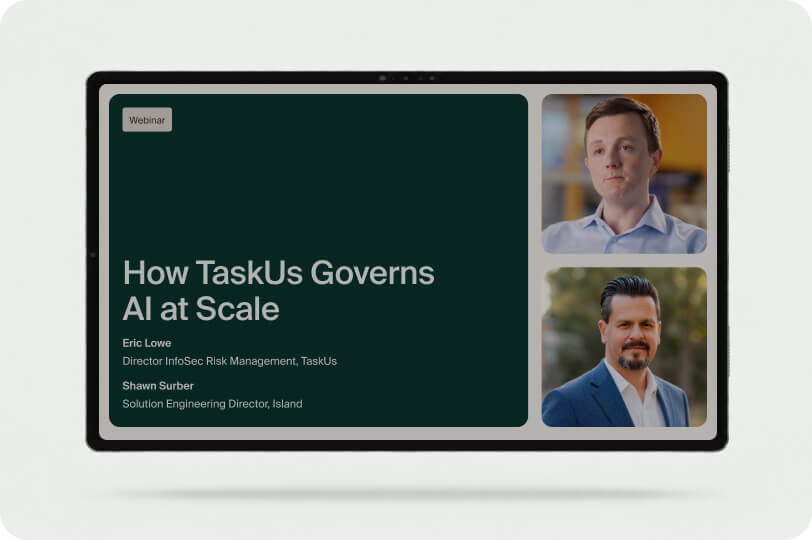
How TaskUs Governs AI at Scale

.png)

.svg)
.svg)

