.svg)
Island Integrates with the Claude Compliance API to Govern AI Use Across Every Surface
Extend DLP, content classification, and security analysis to every Claude session, correlated with what Island already sees from the browser, network, and endpoint.
Enterprise AI adoption isn't waiting for security to catch up. Engineers ship code with Claude Code. Analysts draft with Claude Enterprise. Agents are about to outnumber humans in the enterprise, and they move faster than any network was built to handle. If you can't see inside an AI session, you aren't governing AI. You're guessing. Most security tools see only a sliver of it, and most AI security tools see only what passes through a single channel. Island AI Protect already governs how users work with AI from the browser, the network, and the endpoint. The Claude Compliance API adds a fourth source of context, so Island sees more of every AI interaction, and acts on more of it.
Another pillar, not another point tool
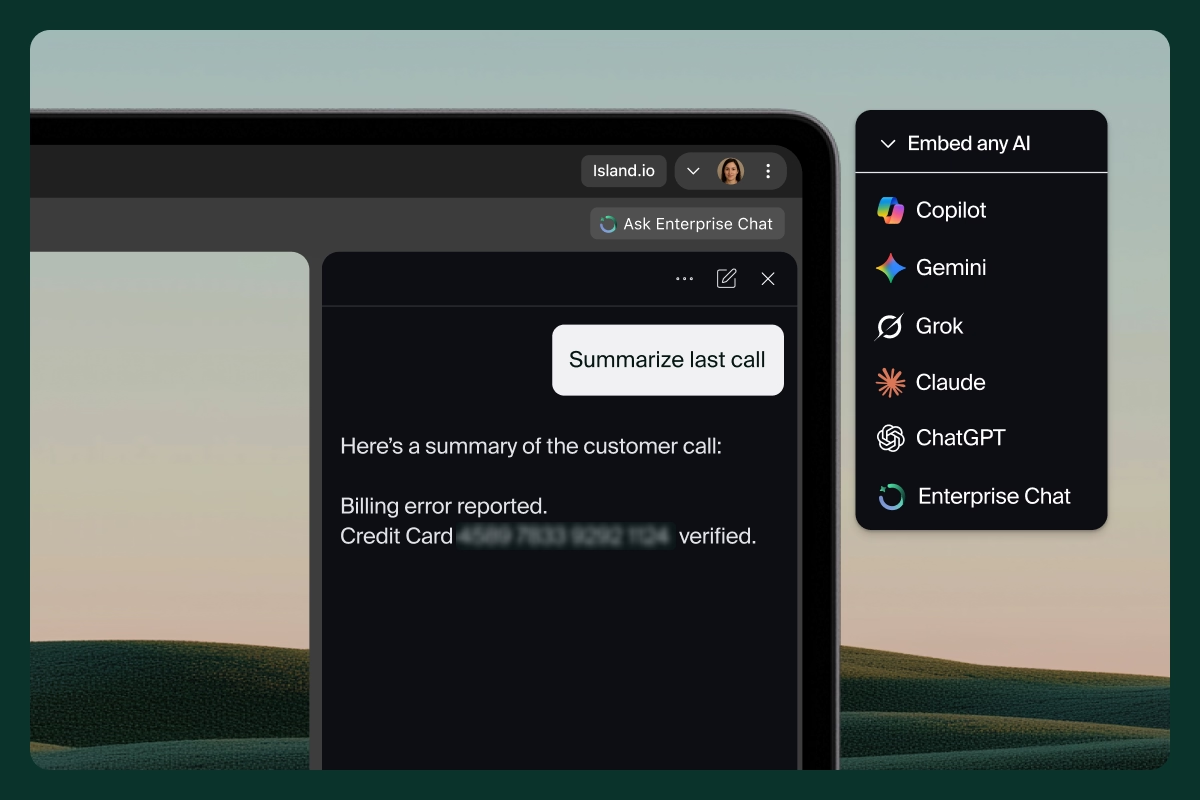
Island protects AI use across the browser, network, and endpoints. Each layer contributes its own context: what the user typed and pasted, what moved across the wire, and what happened locally on the device. The Claude Compliance API adds a fourth pillar: the activity inside Claude Enterprise itself, including chats, uploaded files, and tool calls that never cross a network boundary or surface in a browser session.
On its own, any one of these is a partial view. Together, they reconstruct the full session: what the user touched on the device, what crossed the network, what they typed in the browser, and now what happened inside Claude itself. Island AI Protect correlates all four under one identity, then classifies the content, flags policy violations, and drives enforcement. Most vendors instrument a single channel and call it AI security. Island and Claude work together to add context to a governance capability that already spans the browser, network, and endpoint, which is what lets it see the whole session and act on it.
%201.png)
Classification and policy enforcement on every Claude session
Island connects to Claude Enterprise via the Claude Compliance API and pulls the session content: chats, uploaded files, and attachments. Island’s data protection engine reads it and identifies PII, PHI, and PCI, source code, secrets, and more. Risky or inappropriate content gets flagged, and security violations are raised as incidents and insights, with full context on what was flagged and why, enriched by everything Island already knows from the browser, network, and endpoin
Tracking one user's data across the endpoint and API
This is where the pillars compound. An account manager preps a quarterly business review for a key customer. They open Claude on their laptop and ask it to pull highlights from the last quarter. Claude reads files from a local file system folder, as well as the call notes, renewed contract, a usage export, and a churn-risk worksheet. It then calls a connected Salesforce tool to retrieve the latest pipeline numbers and writes a draft back to disk. Nothing leaves the device through any channel that a traditional DLP can see.
Later, they switch to Claude Enterprise, upload the draft alongside the usage export, and ask Claude to shape it into a customer-facing narrative. Claude returns the artifact in the conversation.
Island captures it all in a single AI session. The endpoint pillar sees the local files. The Compliance API sees the chat, the upload, and the Salesforce tool call. Security teams get every file accessed or generated and every tool call across both surfaces in a single timeline, correlated to the user, the device, and insights about the session itself: intent, sensitivity, risk level, and how this interaction fits the user's broader pattern of AI use. No other approach assembles that view, because no other solution holds all the pieces.
Correlation and risk scoring, not raw logs
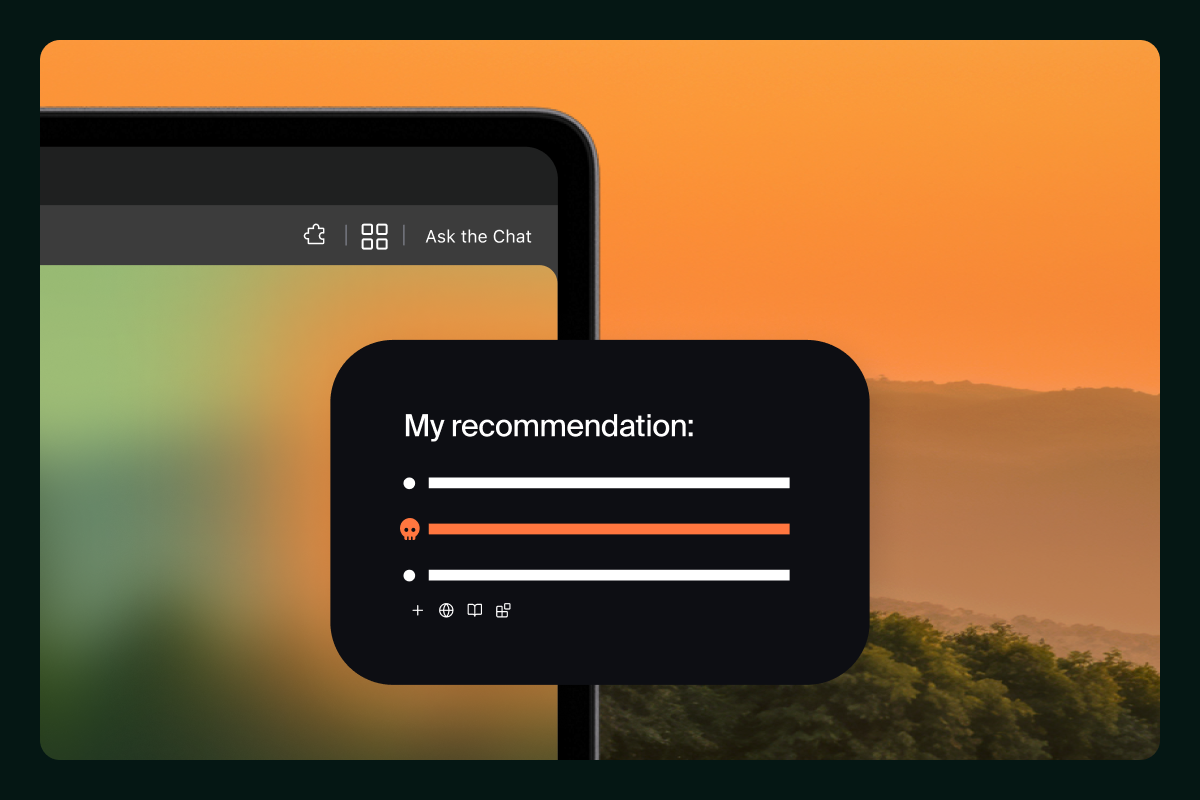
Capturing the session is the starting point, not the product. Island reads each AI interaction in the context of everything else it knows about the user, the data, and the device, then tells you what it means: whether the content is sensitive, whether the behavior fits the user's normal pattern, whether intent looks routine or warrants a second look. A legal reviewer handling a PII that they're cleared for generates no noise. The same data in the hands of someone with no reason to touch it surfaces immediately. The pillars supply the context. The insight is what you act on.
%201.png)
Audit, detect, and respond across every AI surface
When Claude Enterprise activity joins the context Island already holds, the questions security and compliance teams ask routinely have answers.
- Audit on demand. An auditor asks for every instance of regulated data reaching an AI tool last quarter. The answer is a report across Claude Enterprise, Claude Code, claude.ai, and every other AI app your users touched. Not a manual investigation.
- Insider patterns across surfaces. A user uploading earnings data to Claude is one signal. The same user running unusual database queries an hour earlier is another. Island correlates them under one user and surfaces patterns that look harmless inside any single tool.
- Real-time action. A policy hits mid-session. The alert routes to your SIEM, ticketing, and incident-response workflows the same way every other Island insight does, and a notification reaches the end user the moment it fires.
- Data protection in context. A user with access to sensitive data is one thing. The same user moving that data across tools and destinations is another. Island surfaces sensitive data usage inside every AI session, in the cloud or on the device.
Island AI Protect was already governing how your organization uses AI across the browser, network, and endpoint. The Claude Compliance API sharpens that view and widens what Island can enforce. The more surfaces Island sees, the less any single AI interaction can slip past policy.
Get started
The Island integration with Anthropic's Claude Compliance API is now available. Talk to your account team to enable the Claude integration.

Avishai is a Product Group Manager at Island, responsible for the Data protection, Extension platform and AI Security domains. His work focuses on browser infrastructure, modern data protection & secure AI enablement across enterprises worldwide.

.svg)
.svg)

