.svg)
How Island Engineers Build Businesses, Not Just Features
A joint perspective from Island’s VP Product and VP R&D
Since Island’s founding, we’ve devoted as much energy to how we build as to what we build. This starts with a deceptively simple question that guides every decision: How can individual engineers make a continuously growing impact, from developing their first feature to leading their own business domain?
We were very deliberate about building a culture inside the Island Engineering & Product org that enabled them to do just that. Below is a look at the core principles underneath it all and what we learned along the way.
1. Talent density
The most important thing for any company is its talent and trust. For us, it’s not a cliche or rhetoric — it’s reality. At Island, we don’t hand out bonuses or compensation for bringing a friend to work with us. And still, 90% of those in our engineering and product teams were referred by a friend working here. People bring their friends and colleagues because they believe it will be fun to work with them, and/or those friends will significantly contribute to our success. This culture has developed into a massive talent density.
2. Infrastructure first
During Island’s first two years, most of our engineering efforts went into our product and development infrastructure — from the browser’s deployment pipelines, to policy engines, telemetry, CI/CD capabilities, cloud architecture, and more. All this happened before even a single business feature shipped. The rationale behind this decision was simple:
- We realized that building an Enterprise Browser was going to be extremely complex
- We understood our product needed to be enterprise-grade from day one.
At that point, we understood it was time to move to the next phase, the business-focused phase, (not that investing in infrastructure ever stops), which led to the creation of the ‘islands’ model.
3. The ‘islands’ model
We organize around islands: cross‑functional mini‑startups that own an entire business domain. Each island includes an engineering manager, a product manager, developers with all the relevant expertise, and any other roles needed to make that island successful.
The ‘islands’ model is tightly connected to how we view our product. We treat the browser as the platform on top of which we deliver different products to our customers. Each island delivers its products independently, which is the key to Island’s scalability as a company. From roadmap planning and architecture to GTM metrics, each island is its own end-to-end owner over its domain.
With the browser already running on millions of endpoints across hundreds of enterprises, each island enjoys a near‑instant feedback loop. Usage telemetry and customer conversations reveal whether an idea deserves more oxygen, often within only a couple of weeks.
Turns out, our patient investment in infrastructure early on paid off. Today, a relatively small island can ship a brand-new, production-ready module within weeks due to having its own independent architecture and being built on top of Chromium — both a competitive advantage.
4. An Engineer’s journey from feature to business
Let’s examine what the journey of a new developer or product manager at Island looks like, from onboarding onto a specific Island to leading a major business line.
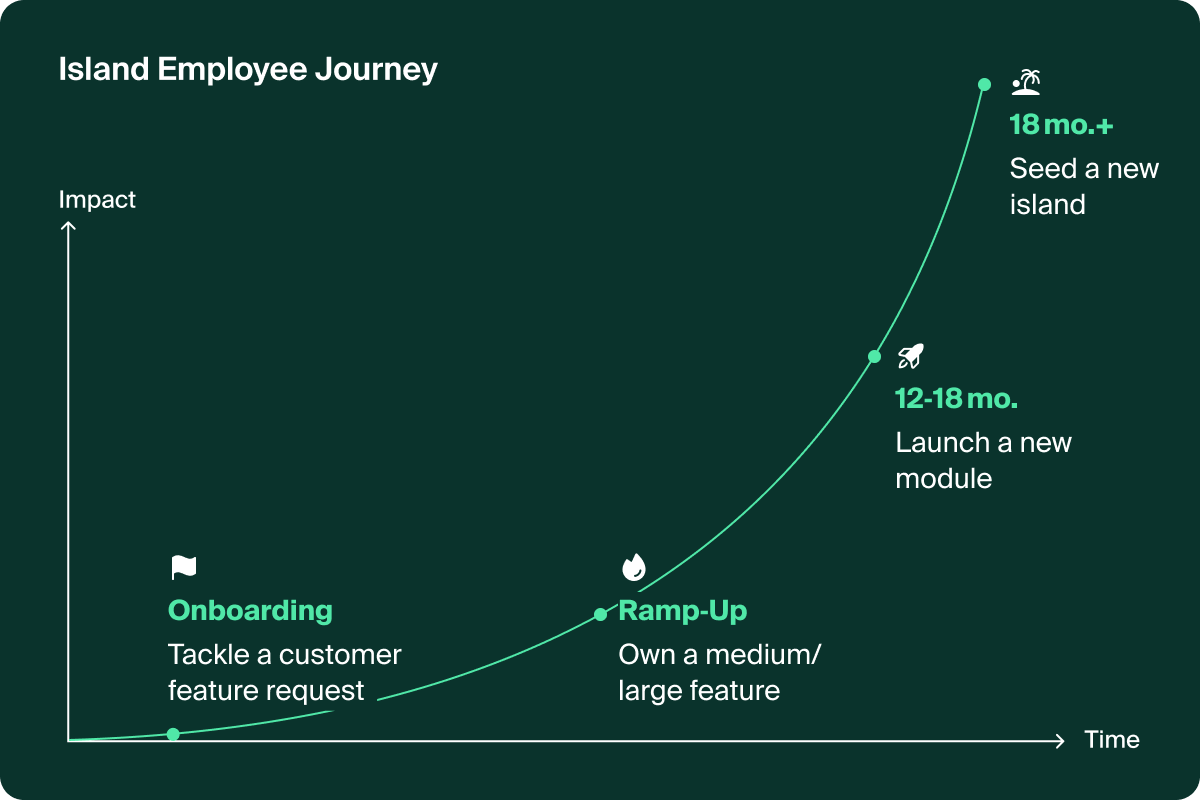
A typical two-year path might look something like this (actual timelines vary):
- Onboarding Phase: Tackle a customer feature request. Execute a small enhancement within an existing module, with a clear impact on target customers
- Ramp-Up Phase: Own a medium/large feature. Lead a new feature within your island, or be a key contributor to a larger-scale project.
- 12-18 Months: Launch a new module. Typically within an existing island, from design to implementation to go-to-market.
- 18 Months and beyond: Seed a new island. Be one of the lead developers or product managers who form a new island, focused on a new business domain.
With Island continuously growing, this trajectory creates an individual growth path for new challenges — whether technical, product, or business-related — and ensures we have people with the right skills and experience available across the verticals where our product is expanding.
5. Engineering & Product — One Team
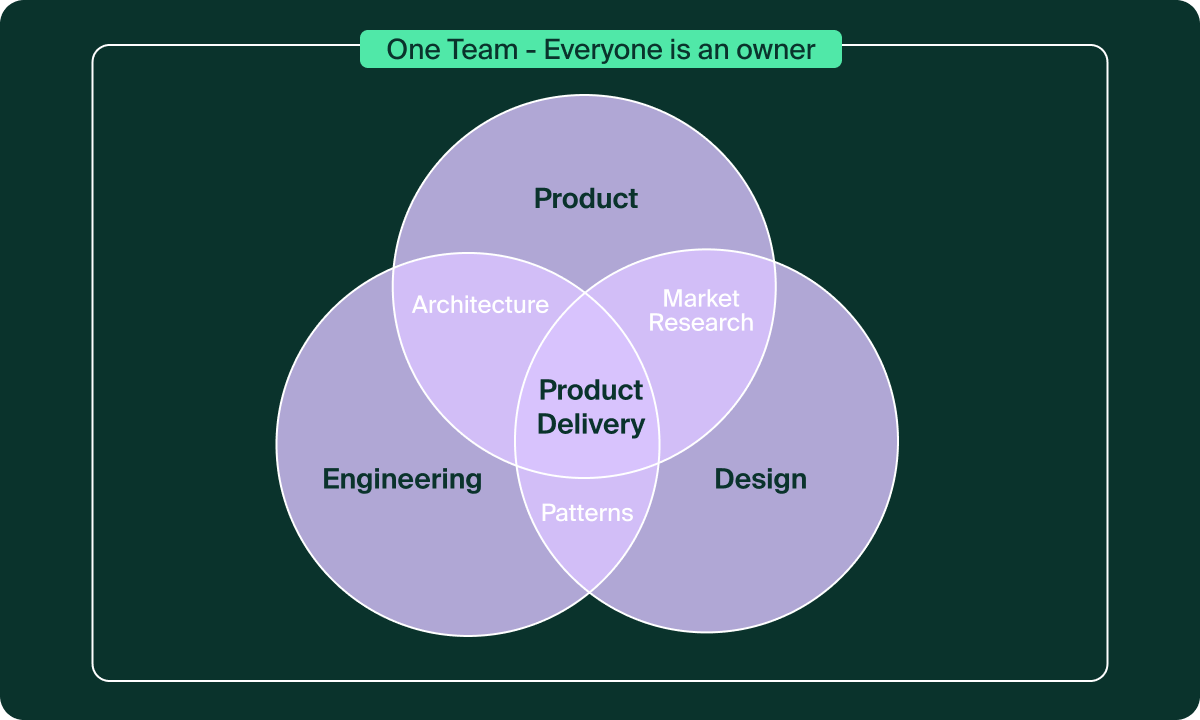
We view Product and Engineering as different expressions of the same craft: problem‑solving at scale. Decisions on architecture, UX, or commercial viability happen in the open, with people comfortably crossing traditional discipline lines all the time. We put whole business domains in the hands of newly formed islands, and we put our trust in their leaders — the product manager, engineering manager, designer, and technical leads. Ownership is evenly distributed: we hold product managers accountable for wrong technical decisions and engineers accountable for a customer requirement not being met — not just the other way around.
Conclusion — trusting the process
The islands model and the growth path of every single engineer and product manager is at the heart of our day-to-day work at Island. These principles, used to inform how we lead Product and Engineering, did not form overnight. We collected, learned, and fine-tuned them over our 5-year journey here at Island. Yet, they all serve the same goal — to pave the way for individuals to make a profound impact on Island’s long-term success while gaining the key skills, experience, and expertise that accelerate their career at Island and beyond.

Daniel serves as the VP of Research & Development at Island and has led the company’s Engineering organization since its inception. Daniel’s career in tech and cybersecurity spans over 20 years, during which he played key roles, leading product development in both emerging startups and industry leading companies.

Alon serves as the VP of Product & Architecture at Island and has been a core leader in the company since its inception. With over a decade of expertise in software engineering and cybersecurity, Alon holds an MSc in Computer Science. Before joining Island, he was one of the founding engineers at a leading industrial cybersecurity platform, where he played a pivotal leadership role within the engineering department.
.png)



.svg)
.svg)

