Island LLM Gateway: One control point for every model call
The Island LLM Gateway puts one control point in front of every AI call, routing each request by policy, protecting data, and setting spending limits.

Every AI request in a company goes somewhere. A developer calls Claude. An agent calls GPT. A support tool calls a model nobody in IT has heard of. Each call needs a key, a budget, a policy, and a record, and most teams manage that with scattered credentials and a spreadsheet.
According to ISACA, 56% of IT professionals do not know how long it would take them to revoke access to an AI system in the wake of a security incident. The Island LLM Gateway gives you a single control point for all your AI providers and systems.
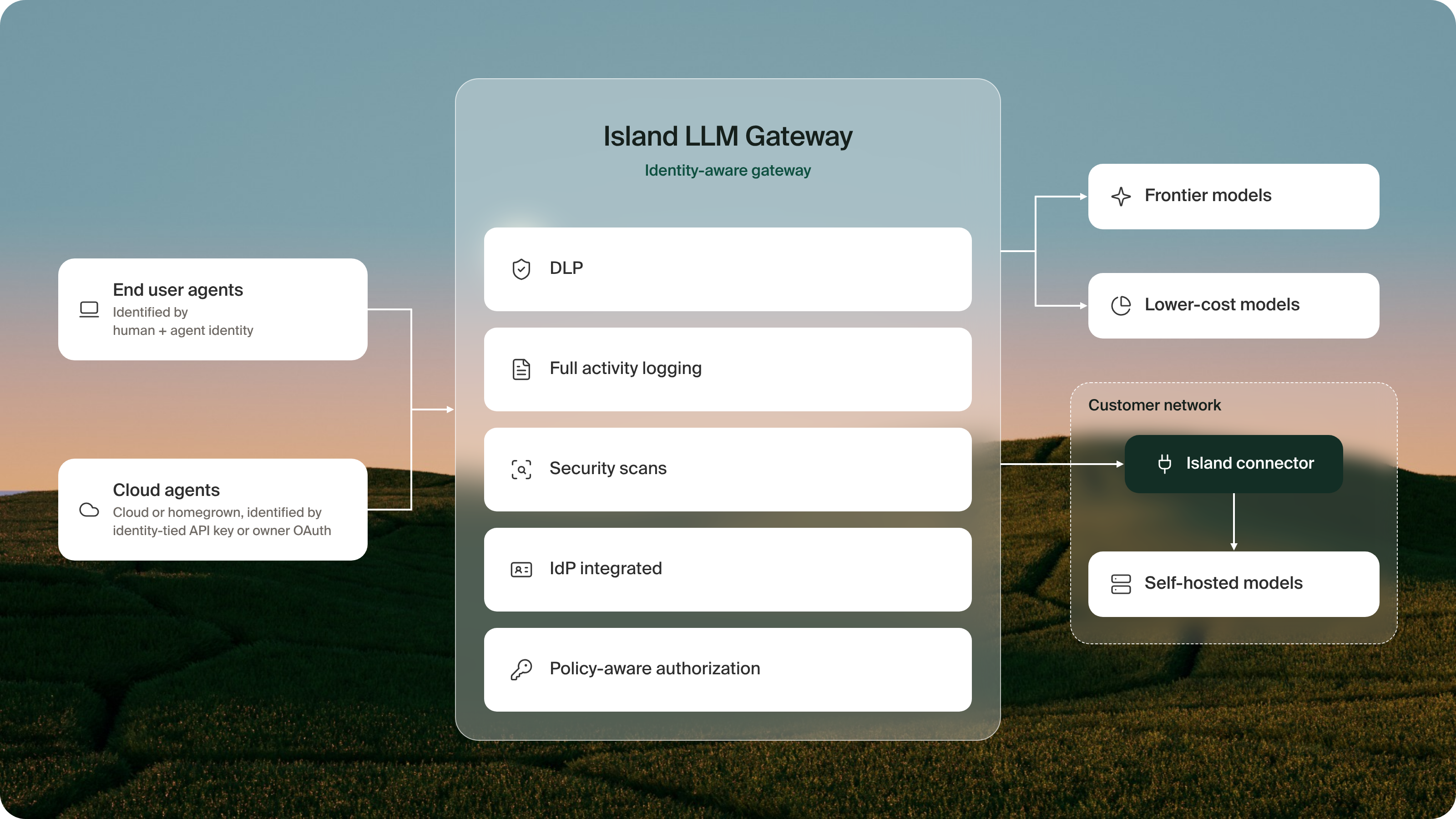
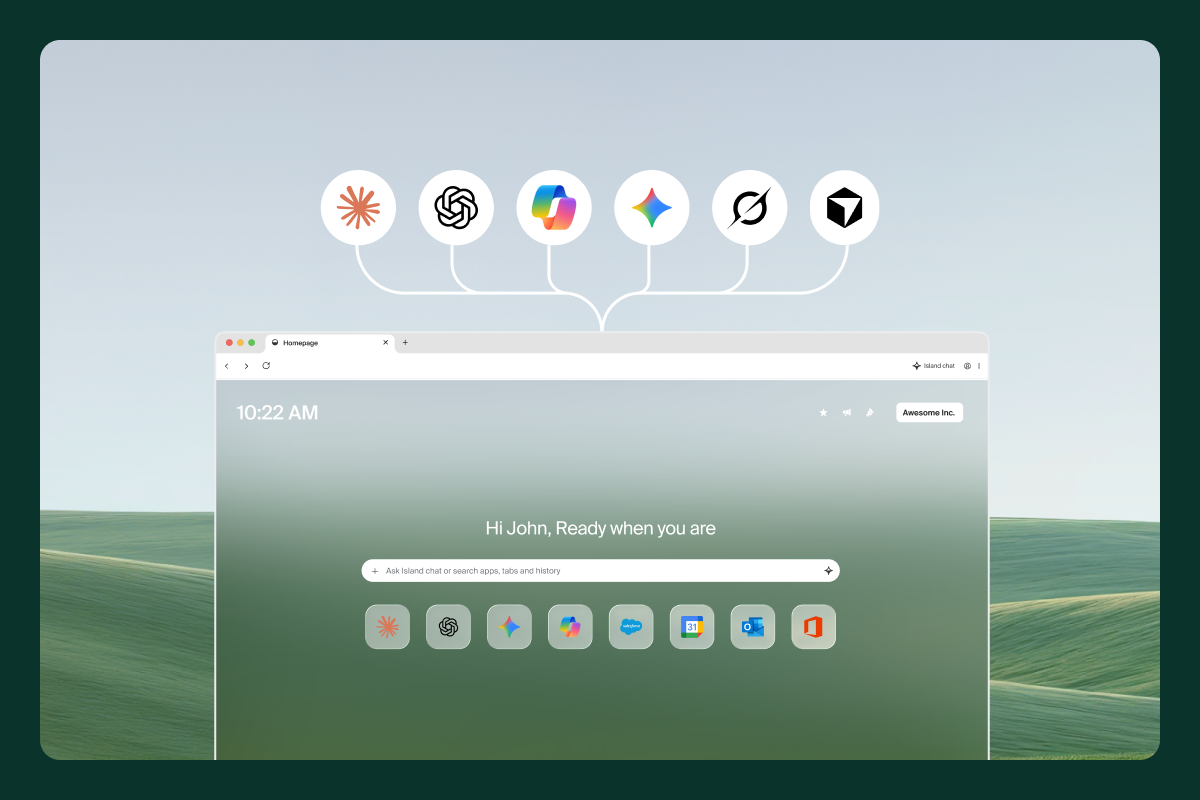
One API for every model
Applications send requests in the OpenAI-compatible format, and the gateway translates for whichever provider sits behind it. Teams switch models without rewriting code, and IT gets a single place to see what is running.
Routing that fits the work
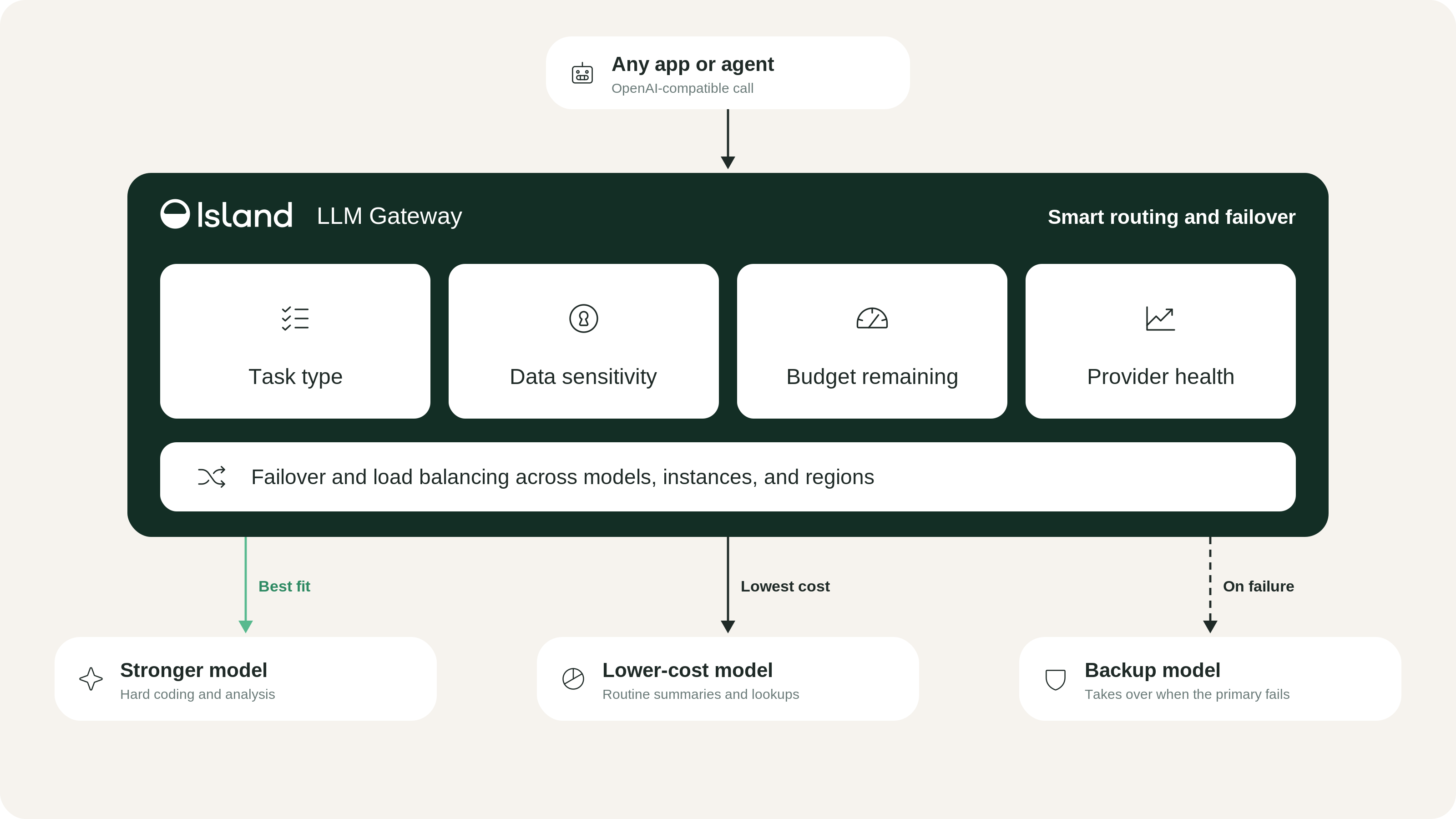
Island routes each request based on what the enterprise needs, for both cost and productivity. A routine summary goes to a lower-cost model. A hard coding task goes to a stronger one. If a primary model fails or hits a rate limit, the gateway reroutes to a backup and spreads traffic across instances and regions, so users keep working.
Identity-aware policies
The Island LLM Gateway integrates with your identity provider to understand agent and user identity. Policy then decides which models each user can see and call, and how they can use those models. Provider credentials stay inside the gateway, which adds them only when a request leaves for the model. Every request, and every dollar it spends, traces back to a named person.
Inherited security controls
The gateway inherits the security capabilities of Island and applies the same data loss prevention (DLP), reputation engines, and security classifiers. DLP uses pre-built and custom detectors, including AI classifiers, that identifies source code, financial records, personal data, and medical information in prompts and in model responses.
The Island LLM Gateway can also detect and mitigate a variety of AI-related threats, including prompt injection attacks and context poisoning. Along with the Island MCP Gateway, it controls how agents access tools, including controlling access by risk, preventing agents from taking unwanted actions, preventing data leakage through tools, and more.
Island also creates a complete audit log of all events and actions that cross the gateway. These logs can be exported to your SIEM for a complete view of all AI activity.
Keys, budgets, and the full cost picture
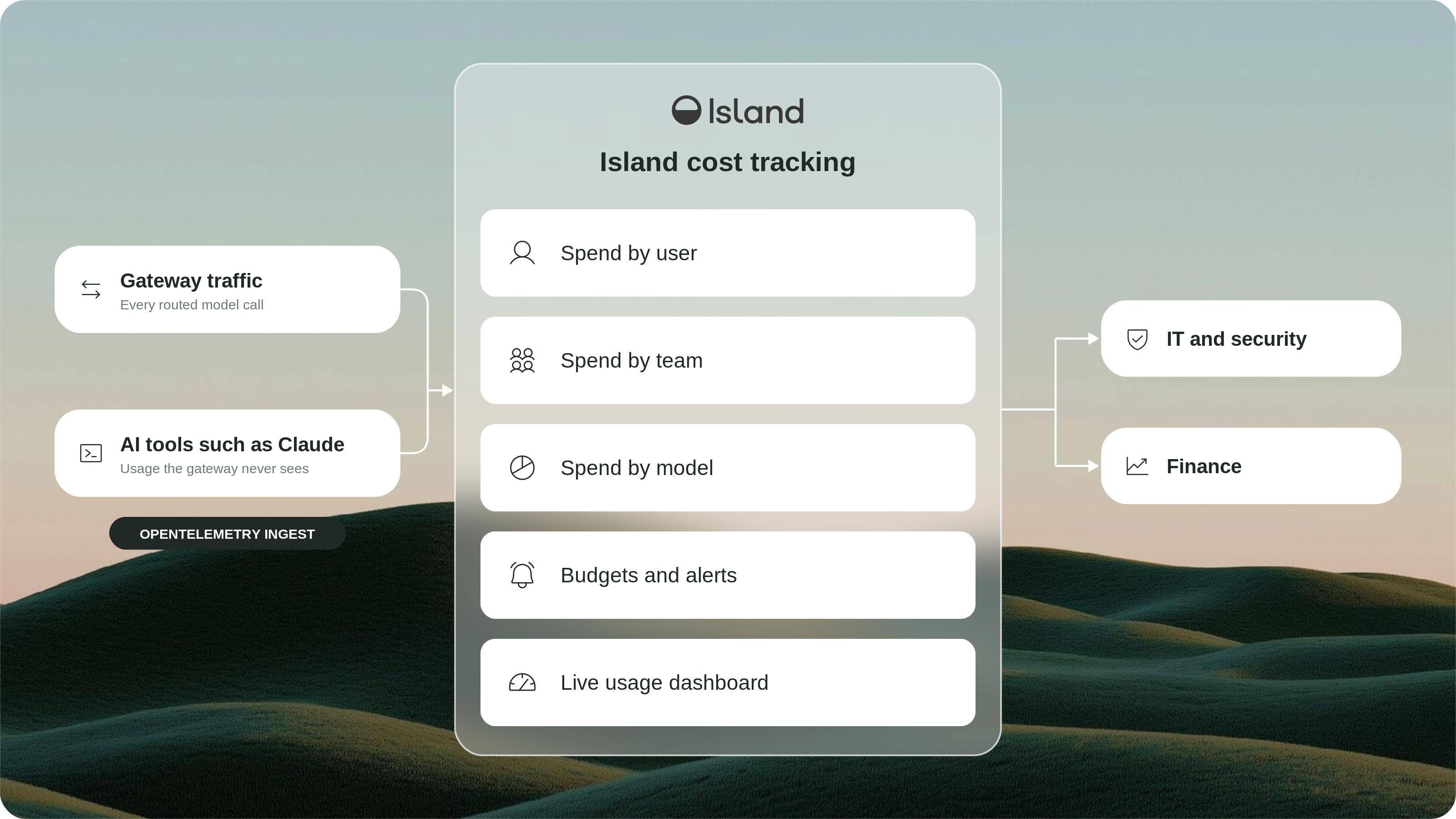
Virtual API keys give each user or team its own spending limit and token cap. The admin dashboard shows live usage and lets IT manage keys and configuration in one place. Caching trims repeat spend and response times.
Most gateways can only count what passes through them. Island also ingests OpenTelemetry (OTEL) data directly from tools like Claude, so cost tracking covers spend that never touches the gateway.
Ask where your gateway comes from
An LLM gateway reads every prompt and holds the credentials for every model provider. That makes it one of the most trusted pieces of software in the stack. Treat it that way. Ask who maintains every package inside it, how fast fixes ship, and who picks up the phone when something goes wrong.
Island LLM Gateway comes from a vendor that already secures the enterprise browser, network, data, and identity. It runs under one policy, writes to one audit trail, and ships with a team accountable for it.
The Agentic Enterprise will run on dozens of models. The control point in front of them should be the most dependable thing in the stack.
Schedule a meeting to see Island LLM Gateway.

Roy is a Director of Product Management at Island, where he builds identity for a workforce that is no longer only human. He owns non-human and agentic identities — how enterprises name, trust, and govern the agents now doing real work — alongside the Enterprise AI Control Plane that keeps that work in bounds inside the Enterprise Ecosystem. It runs straight into the AI features people use every day, from automation to chat, so the same thread connects the humans on the job and the agents working beside them. He builds for who is in the workspace now, and for who is arriving.

Chris Gaun is Vice President of Product GTM Strategy at Island, where he shapes how Island's platform reaches the market as AI agents change how work gets done. Before Island, he led AI agent platform work at EY and headed product at Solo.io.