Simplified infrastructure
- Easy management from single cloud console
- Simple plug-and-play installation on any device
- Built-in Enterprise-grade, global security

Large infrastructure. Ongoing cloud costs. Login delays. Performance trade-offs.
It doesn’t have to work this way.
Island is the modern alternative to VDI — simplifying infrastructure, cutting costs, and delivering the fast, seamless work experience your teams expect.
Large infrastructure. Ongoing cloud costs. Login delays. Performance trade-offs.
It doesn’t have to work this way.
Island is the modern alternative to VDI — simplifying infrastructure, cutting costs, and delivering the fast, seamless work experience your teams expect.
See Island in action
Let us know you’re interested in test driving Island and we’ll be in touch to understand your needs and set up a demo.
By submitting this form you consent to be contacted by Island, and acknowledge our Privacy Policy
Large infrastructure. Ongoing cloud costs. Login delays. Performance trade-offs.
It doesn’t have to work this way.
Island is the modern alternative to VDI — simplifying infrastructure, cutting costs, and delivering the fast, seamless work experience your teams expect.
See Island in action
Let us know you’re interested in test driving Island and we’ll be in touch to understand your needs and set up a demo.
By submitting this form you consent to be contacted by Island, and acknowledge our Privacy Policy
.png)
.png)
.png)
.png)
.png)













Requires large investments in servers, networking, virtualization software.

High ongoing costs from infrastructure, licensing, and cloud hosting.
Session delays, login interruptions, performance dependent on network.
.avif)
Download the VDI Solution Brief to understand how the enterprise browser is the modern alternative to Virtual Desktop Infrastructure.
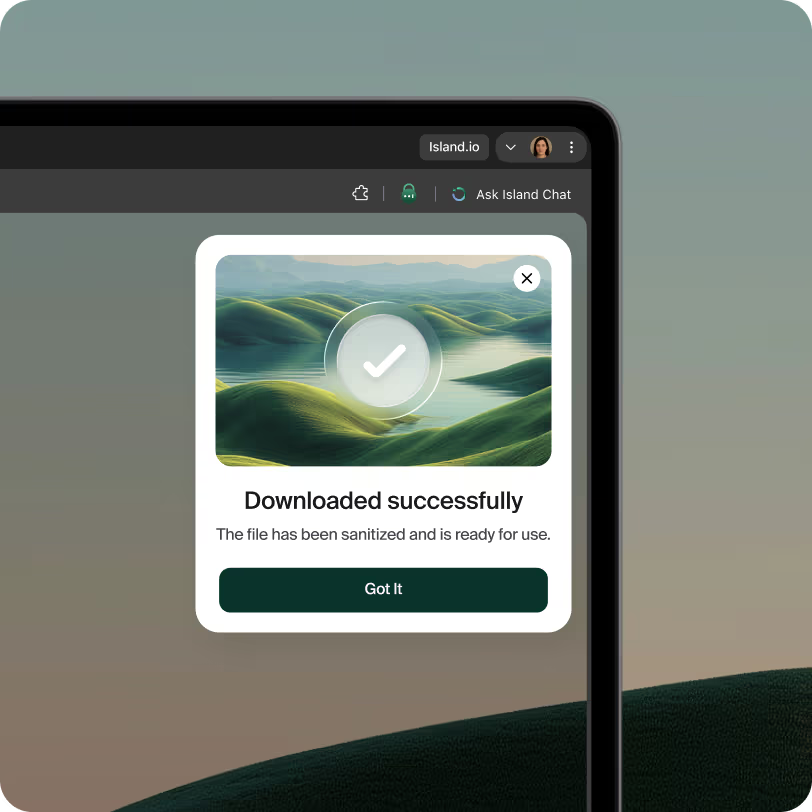
Get secure, policy-driven control over how work happens on the web. Applications run at native speed while built-in security, visibility, and governance protect data and users across any device.
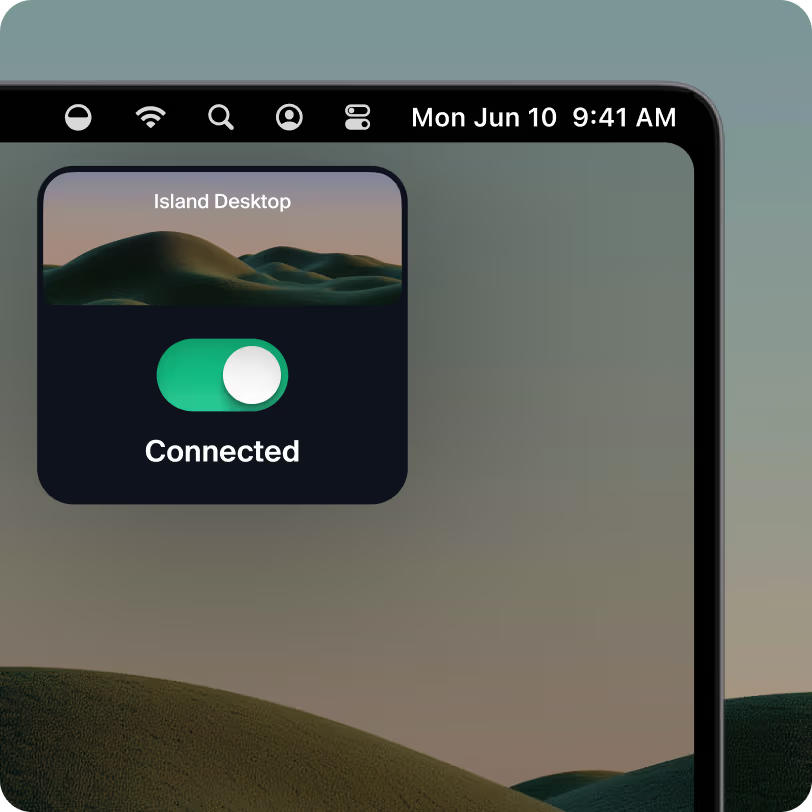
Connect users to SaaS and private applications with built-in Zero Trust access within Enterprise Browser. Policies evaluate identity, device posture, and context to ensure users reach the resources they need without relying on traditional VDI.
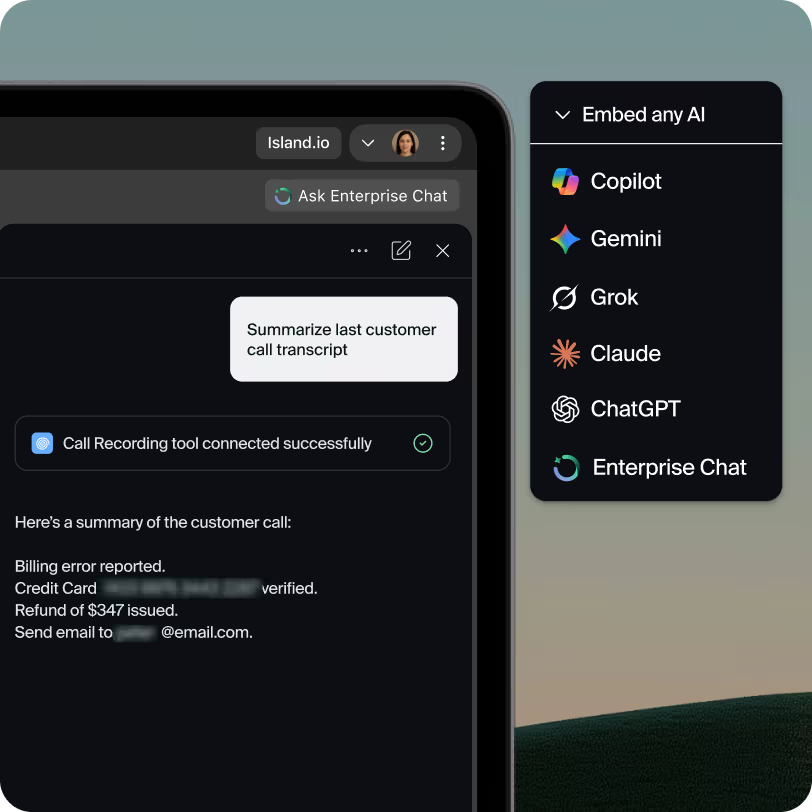
Enable teams to safely use AI assistants and innovative apps without exposing sensitive data. Island creates intelligent boundaries inside the browser so data stays fully protected and under your control.















No. Island is not a virtualization platform. It is an enterprise browser that provides secure, managed application access without substantial infrastructure or cloud costs.
In general, no. The Enterprise Browser installs locally and receives policies from the cloud-based Island Management Console. Island hosts and maintains the cloud services.
VDI introduces login delays and performance trade-offs. Island offers native performance with no unnecessary virtualization or network routing.
No. Island is based on the Chromium rendering engine. Applications that work with Chrome or Edge will work with Island. IE Legacy Mode is supported.
Yes. Management capabilities are delivered directly through the browser, enabling deployment on managed or unmanaged devices.
No. Island is designed to work like a familiar Chromium-based browser, so users can start using it immediately without special training. Organizations can deploy the browser and apply policies centrally through the Island Management Console, allowing teams to get up and running quickly.
Island integrates with enterprise identity systems to support single sign-on (SSO). This allows users to authenticate once through your existing identity provider and securely access SaaS and internal web applications directly within the browser. Policies and access controls can also evaluate identity, device posture, network, and other contextual signals to determine what users can access.
Administrative overhead is minimal. Island installs locally on devices and is managed centrally through the cloud-based Island Management Console, eliminating the need for servers, brokers, or complex infrastructure. IT teams can manage policies, access controls, and security settings from a single console without maintaining traditional VDI infrastructure.

.avif)

.svg)
.svg)
