.svg)
What Is Data Protection?
Data protection combines classification, boundaries, and real-time enforcement to keep sensitive data inside approved limits as work moves into browsers, SaaS apps, and AI tools.

Key takeaways
- Data protection combines three elements: classification, defined boundaries, and real-time enforcement, rather than after-the-fact monitoring alone.
- Legacy DLP, CASB, and network stacks were architected for known channels (email, endpoint, network) and often miss data movement that happens inside browser sessions and AI prompts.
- Effective data protection enforces policy at the point of interaction, where data moves, not solely at the network perimeter.
- Data protection overlaps with, but is distinct from, regulatory data privacy compliance such as GDPR.
- Building a practical program means extending existing DLP and CASB investments to cover browser-based and AI-based data paths, not replacing them.
Introduction
Most security leaders can describe their data protection stack in detail (DLP rules, CASB policies, endpoint agents), yet still struggle to answer a simpler question: where does our sensitive data go during a normal workday? That distance has widened as work has moved into SaaS applications, personal cloud storage, and generative AI tools.
Data protection, defined here as enterprises practice it today, is distinct from adjacent terms like "data loss prevention" (DLP) and data privacy compliance. The sections below define it and outline what a program built for how people actually work looks like.
Defining data protection
Data protection is the set of policies, classification practices, and technical controls that keep sensitive information inside approved boundaries, whether it's leaving through an intentional action, an accidental mistake, or a routine workflow nobody thought to restrict. It answers three questions continuously: what data is sensitive, where is it allowed to go, and what happens the moment it tries to go somewhere else.
The term is often used interchangeably with narrower concepts, which creates confusion. "Data leakage protection" typically refers to preventing unauthorized exfiltration specifically, a subset of the broader discipline. "Data loss prevention," or DLP, historically described a category of tools (content inspection, pattern matching, endpoint agents) rather than the outcome itself. And "data privacy" usually refers to regulatory obligations, such as GDPR and CCPA, governing how personal data is collected, stored, and processed, which is related but distinct from the operational security controls covered here.
For enterprise IT and security leaders, data protection in practice means the operational work: knowing what's sensitive, defining where it can flow, and enforcing that in real time as employees do their jobs.
The core components of a data protection program
Classification
Organizations can't protect what they haven't identified. Classification, tagging documents, records, or data types as sensitive (customer PII, source code, financial records, protected health information), is the prerequisite step. Without it, every other control is guessing.
Boundaries
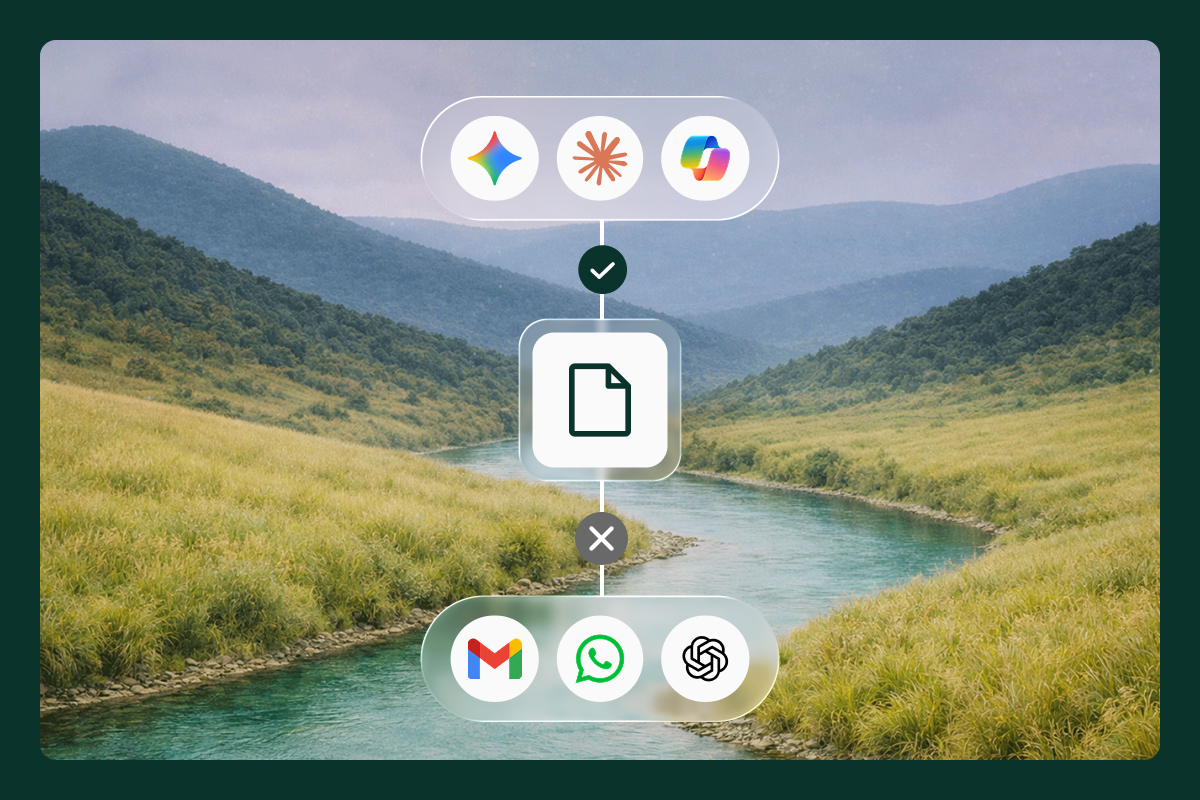
Once data is classified, an organization defines where it's allowed to move: which applications can hold it, which geographies it can travel to, which roles can access it. A customer database might be approved for the CRM and a handful of analytics tools, but not for a personal Gmail account or an unsanctioned AI assistant.
Enforcement
Boundaries mean nothing without enforcement at the moment data tries to cross them, a copy-paste action, a file upload, a download, a print command, a screenshot. Many programs fall short here. Policy exists on paper, but the technical control isn't present at the point where the action happens.
Visibility and lineage
Finally, effective programs need visibility into how data moves across an entire session, not just a snapshot at the network edge. Seeing that a file left an approved SaaS app is less useful than seeing the sequence: opened, copied, pasted into an unmanaged app, then shared externally.
Why traditional data protection stacks fall short
Most enterprise data protection architecture, including email security gateways, endpoint DLP agents, network proxies, and CASB, was built for a set of known, predictable channels. Email flows through a gateway, endpoint agents watch the local file system, and network proxies inspect traffic at defined chokepoints. This architecture assumes data protection is a monitoring problem, and it addresses it well within its own boundaries.
But the data protection blind spot AI has created is that work no longer happens where those tools are watching. According to McKinsey's 2025 workplace research, 78% of organizations now have active generative AI initiatives underway, meaning employees are routinely pasting content into chat interfaces, uploading documents for summarization, or drafting with AI copilots embedded in browser tabs. To an endpoint agent or network proxy, that traffic looks identical to any other encrypted HTTPS session. There's no file to inspect, no attachment to scan, only a browser tab doing what browser tabs do.
That same blind spot applies to everyday, non-AI actions: copying a spreadsheet into a personal cloud drive, pasting customer data into an unmanaged SaaS form, or plugging in a USB drive that endpoint policy never anticipated. Closing it also requires enterprise DLP for generative AI that gives visibility into these browser-native actions, which sit outside the assumptions legacy tools were built on.
Omdia's 2025 "State of Workforce Security" research found that roughly 85% of the enterprise workday now happens inside the browser, and Forrester's 2026 Digital Workplace survey found that 98% of workers use a browser to do their jobs, with 72% of information workers doing most of their work there. Verizon's Data Breach Investigations Report has consistently found a human element present in the majority of breaches, 62% to 68% depending on the year. Most incidents trace back to an ordinary action, not a sophisticated external attack.
What effective data protection looks like today
Closing that blind spot means moving enforcement to the point of interaction, the browser session itself. Classification, boundaries, and real-time controls can operate together there instead of relying on network-level inference, and none of it requires ripping out the tools already in place. This is how Island approaches data protection: seeing the action as it happens, understanding whether it violates policy, and enforcing the appropriate response before the data leaves the approved boundary.
Practically, this looks like applying policy to a copy-paste action into an AI prompt, blocking or watermarking a download from a sensitive SaaS app, or restricting screen capture on a page containing regulated data. None of it waits for the file to hit a network chokepoint that may never see it. It can also mean extending Microsoft Purview labels and policies into the browser itself. Classification decisions made in existing Microsoft 365 tooling carry through to the point where employees interact with the data. The goal is augmentation of existing DLP and CASB investments, not a rip-and-replace exercise. This is where preventing data leaks in the browser specifically closes the channel that legacy architecture wasn't designed to see.
This operational work is separate from regulatory compliance. GDPR, for instance, is a comprehensive EU data privacy law that took effect in 2018 and governs how personal data is collected and processed. It's a distinct but related driver that pushes many organizations toward stronger data protection practices in the first place.
Building a practical data protection program
A workable program generally follows a sequence: discover and classify sensitive data across the organization, define the boundaries for where that data can flow, extend enforcement to the channels where data moves, including protecting sensitive data inside the browser and SaaS applications, and then monitor outcomes to refine policy over time.
This sequence needs to account for both intentional exfiltration and the far more common accidental exposure: an employee pasting a client list into the wrong tool, not realizing the destination falls outside approved boundaries. Most incidents aren't malicious, which changes how controls should be designed, a distinction data leakage and loss prevention best practices generally emphasize. The same logic extends to SaaS data loss prevention, where the volume of approved-but-unmonitored applications creates its own version of the same blind spot.
The direction data protection is heading
Data protection means keeping sensitive information inside approved boundaries as it's created, used, and moved, regardless of which application or interface it passes through. The organizations ahead of this are the ones treating the browser and AI tools as first-class channels for enforcement, not blind spots to route around. As work continues to consolidate into browser-delivered applications, data protection programs will need to follow the data to where it lives.
FAQs
How is data protection different from data loss prevention (DLP)?
Data protection is the broader discipline: classification, boundary definition, and enforcement working together. DLP historically refers to a category of tools built around content inspection and pattern matching, usually deployed at email gateways, endpoints, or network proxies. A DLP tool can be one component of a data protection program, but the terms aren't interchangeable, and treating DLP tooling as the whole strategy is often where problems originate.
Does data protection replace our existing DLP and CASB investments?
No. Most stacks are missing coverage of browser and AI-based data movement. The existing tools aren't flawed; they were built for different channels. A practical approach extends classification and policy decisions already made in DLP or CASB systems, including labels from platforms like Microsoft Purview, into the browser session, where enforcement can happen at the point of interaction rather than at a network chokepoint that may never see the traffic.
How does data protection relate to GDPR or other privacy regulations?
They're related but distinct. GDPR and similar frameworks govern how personal data is collected, stored, and processed, a legal and compliance obligation. Data protection, as covered here, is the operational security work of classifying sensitive data, defining where it can flow, and enforcing that in real time. Strong data protection practices support regulatory compliance, but passing an audit doesn't mean the operational blind spots around browser and AI usage are closed.
What data movement do traditional stacks typically miss?
Email gateways, endpoint agents, and network proxies were built for known channels: file attachments, local file systems, defined network chokepoints. They generally can't see actions inside an encrypted browser session: pasting text into an AI chat interface, uploading a document to an unsanctioned SaaS tool, or copying data into a personal cloud drive. To these tools, that traffic looks like any other HTTPS session.
Is most data exposure malicious, or is it accidental?
Verizon's Data Breach Investigations Report has consistently found a human element in the majority of breaches, 62% to 68% depending on the year, and most of that traces back to ordinary mistakes rather than deliberate exfiltration. Programs designed only to catch bad actors tend to miss the more common case: an employee pasting a client list into the wrong tool without realizing it falls outside approved boundaries.
Where should we start building or improving a data protection program?
Start with classification. Organizations can't enforce policy on data they haven't identified. From there, define boundaries for where classified data is allowed to move, then extend enforcement to the channels where data moves today, including browser sessions and AI tools. Monitoring and policy refinement come last, once the earlier steps are in place.
Does enforcing data protection in the browser slow employees down or block legitimate work?
Enforcement at the point of interaction can be scoped narrowly. For example, it can block a paste into an unsanctioned AI tool while allowing the same action into an approved one, or watermark a download rather than blocking it outright. The goal is policy that matches actual data sensitivity and destination, not blanket restriction, so legitimate work in approved applications continues unaffected.

Island is defining the future of work for people and AI agents. Its enterprise agentic control plane helps organizations enable, govern, and audit agentic workforces alongside people. Island boosts productivity across devices, browsers, applications, networks, and data while protecting sensitive information, simplifying access, and helping enterprises scale AI safely.



.svg)
.svg)

