.svg)
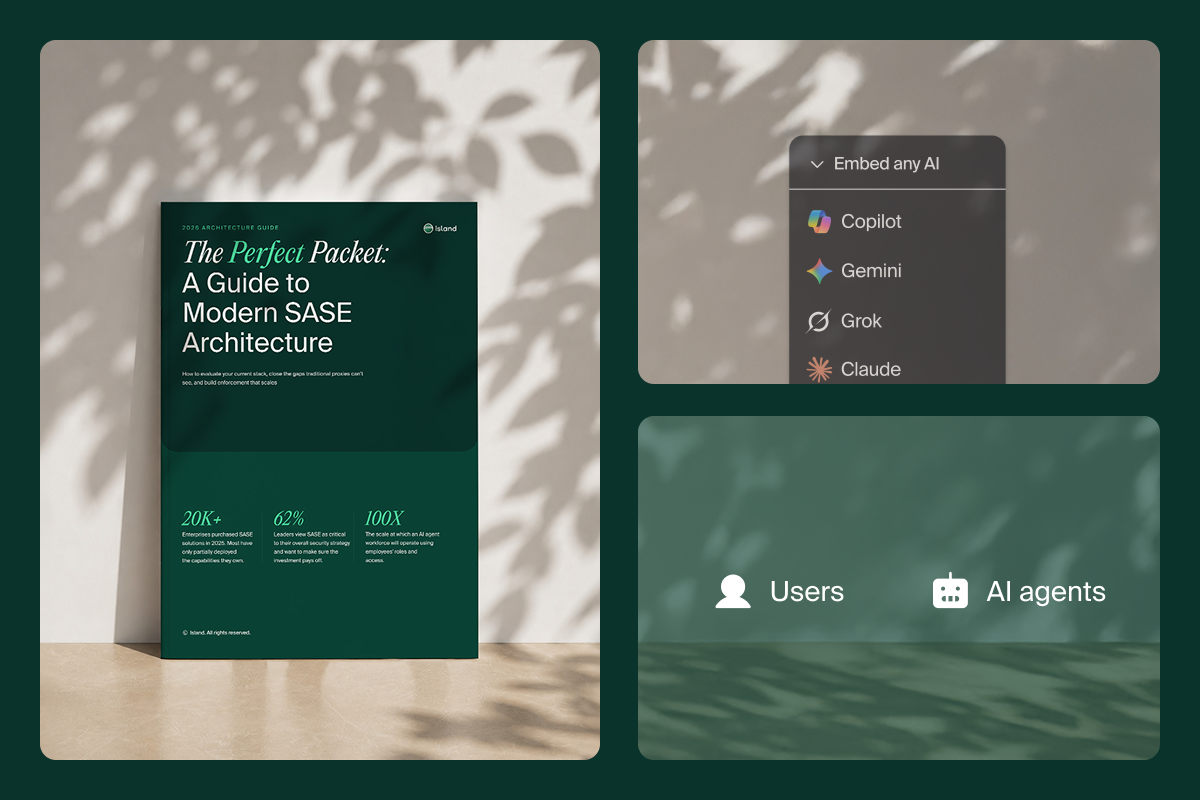
Introducing Island Enterprise Network: The Perfect Packet for Modern SASE
Learn how Island enforces Zero Trust at the point of work and why modern SASE architecture can't live in the network anymore.
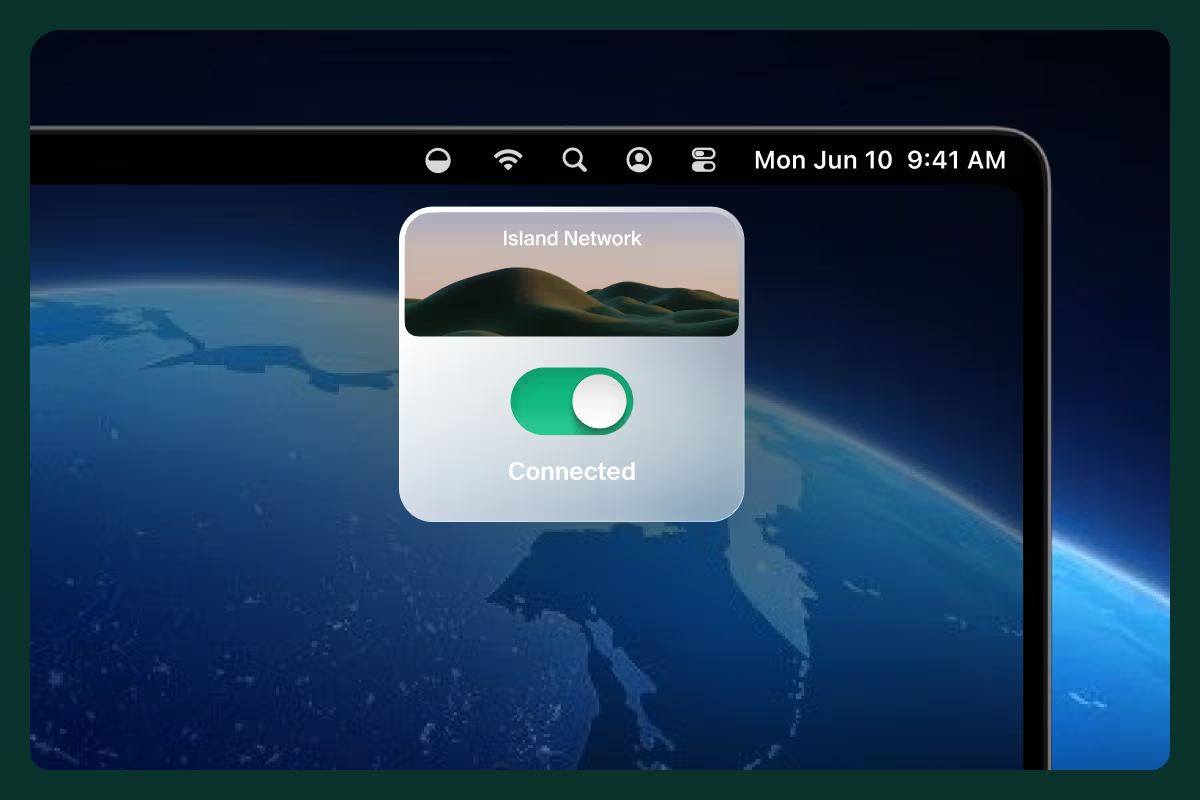
Work has changed fundamentally. Employees operate across SaaS applications and AI tools from anywhere, asynchronously, at all hours. AI agents now act on behalf of users - calling tools, accessing data, and executing workflows at a scale no human workforce can match. The networking patterns that SASE was built to secure no longer reflect how work actually moves.
Island Enterprise Network fixes that, offering a full SASE solution. ZTNA, SWG, CASB, DLP, RBI, and DEX are enforced at the browser and endpoint, at the moment of interaction, before data leaves the device. The Island Network is used selectively; traffic is routed through it only when inspection or routing adds genuine value. Backhaul is the fallback, not the default.
Proxy-based SASE was built for a different internet
Traditional SASE enforces policy at the network layer. All traffic is routed to a cloud PoP, broken, inspected, and forwarded, regardless of whether a direct path exists. That model made sense when SaaS was limited, and routing everything through a central inspection point was a reasonable tradeoff.
The majority of web traffic runs over TLS 1.3, and HTTP/2, HTTP/3, and QUIC are now standard in every major browser. Certificate pinning prevents decryption for a growing list of applications. Post-quantum cryptographic implementations are already deployed in major browsers. These protocols were engineered to be fast and are structurally incompatible with legacy break-and-inspect architectures.
The result is a growing inspection gap. Modern encryption makes decryption impossible for more and more apps, while bypass lists quietly cover the rest. Every exemption is a session outside the security perimeter, and an architecture that requires exemptions to function isn't enforcing policy; it's avoiding it.
Users feel it directly. When enforcement depends on routing everything through a distant proxy, performance suffers. CRM sessions lag. Video calls stutter. SaaS workflows slow or break entirely when proxy inspection interferes with modern application behavior. Users find workarounds to stay productive, and those workarounds expand the attack surface. When security creates enough friction, people work around it. That's not a user problem. It's an architecture problem.
AI made this gap impossible to ignore. A user pastes internal data into a prompt. An agent calls an external tool via MCP. Generated output moves into a report or a code repository. None of this travels the network in ways a proxy can interpret, and for agentic workflows, there's no human session to inspect at all. Traditional SASE vendors respond the only way their architecture permits: block AI or allow it. Neither option serves the modern enterprise.
Enforcement at the last mile
Island moves the enforcement point from the network to the browser and endpoint. For browser traffic, policy is applied natively at the DOM layer, before content renders, and before data leaves the session. Island operates inside Chromium, so it sees rendered content and user intent directly, not inferred from packet metadata. There's no traffic rerouting, no TLS interception, and no break-and-inspect.
For out-of-browser traffic, desktop applications, background services, and legacy protocols, Island Desktop intercepts traffic at the device level and steers it selectively to Island Global Network for inspection, only when policy requires it. WireGuard-based tunneling handles encrypted transport across all ports and protocols.
Identity, device posture, geolocation, application context, and user actions are all evaluated locally, in real time, at the moment of interaction. One policy engine. One audit trail. One Enterprise Agentic Control Plane. There is no service chaining across separate consoles.
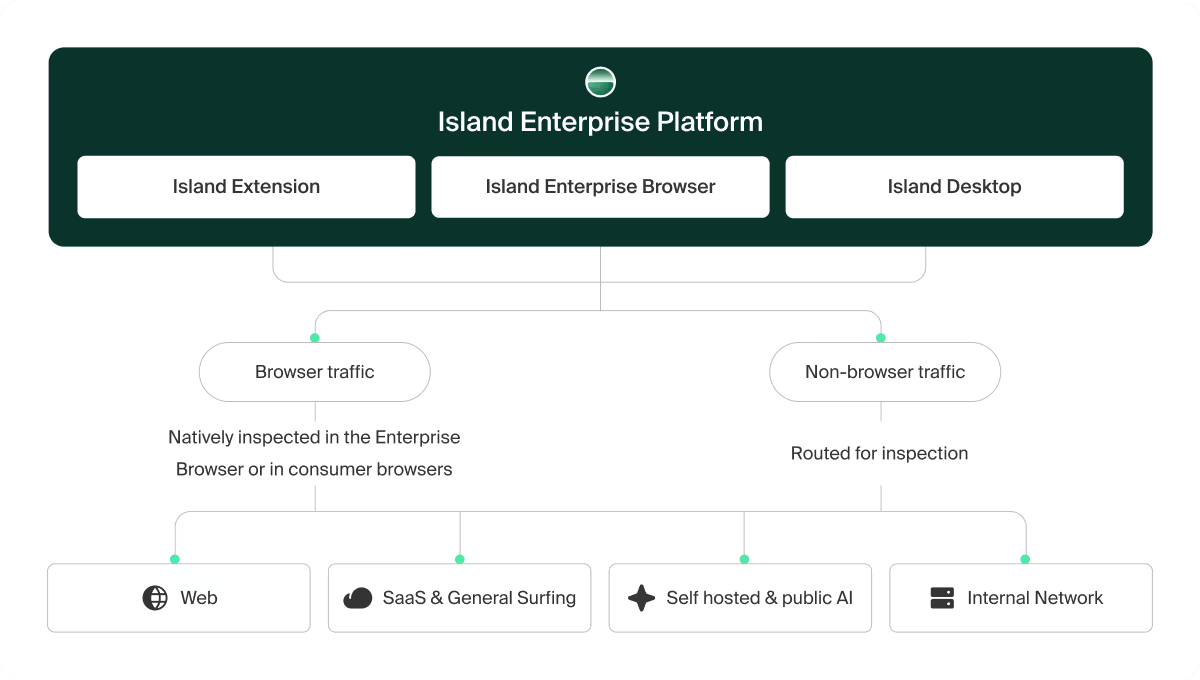
Full SASE coverage: One platform, one policy fabric
Island Private Access (ZTNA)
With Island Private Access, you get application-level Zero Trust access for web and non-web applications, aligned with NIST SP 800-207. Access is granted per application, per session, based on user role, device posture, location, and identity - evaluated continuously, not just at login. Private resources stay unreachable from the internet, and there's no lateral movement risk.
Browser and Extension deliver agentless access to web and private applications. Island Private Access delivered via Island Desktop extends the same model to all ports and protocols, SSH, RDP, SMB, SIP, QUIC, and custom protocols via WireGuard based tunnel. One policy engine, full DLP, last-mile controls, and configurable audit trail across every session.
Secure Web Gateway (SWG)
Browser traffic is enforced natively at the DOM layer with URL filtering, anti-malware, anti-phishing, and DNS security applied before pages render. No proxy detour. No TLS inspection. Island sees rendered content and payloads assembled inside the browser, closing the last-mile gap that proxy-based SWGs cannot reach.
For out-of-browser traffic, Island Desktop steers selectively to Island Cloud SWG. SSL/TLS inspection applies only when policy requires it, using BYOCA within the enterprise PKI, one policy framework, and a full SIEM-integrated audit trail across every session.
Data Protection (DLP)
Island protects data at the DOM layer before encryption. Data Lineage traces movement across browser, SaaS, desktop, AI tools, and device channels. Data Boundaries keep corporate data within sanctioned apps and out of personal accounts, unsanctioned AI tools, and unmanaged destinations. Detection uses pattern matching, EDM, OCR, and AI classifiers. Coverage extends beyond the browser: endpoint and network DLP apply the same policies to managed devices and traffic flows, so protection follows the data wherever it moves. Policy is defined once and enforced everywhere.
SaaS API Protection (CASB)
CASB extends visibility and control into SaaS environments through native APIs, monitoring files, permissions, configurations, and sharing activity without rerouting traffic. Posture detection identifies misconfigurations, missing MFA, overprivileged accounts, and external shares. The same DLP detectors used inline in the browser apply out-of-band to cloud-stored content. Remediation can be automated, admin-reviewed, or user-driven.
AI and Agentic AI Governance
Blocking AI tools doesn't stop usage - it pushes employees to unsanctioned ones, creating shadow AI that IT can't see or govern. Island governs AI at the point of interaction, before data leaves the device. Data Boundaries define approved tools and tenants. Content-aware detection inspects prompts, uploads, and data in real time. For agentic AI, tool calls, MCP access, and agent-to-agent communication, every action is governed at the presentation layer and logged.
Remote Browser Isolation (RBI)
Local isolation runs natively inside the browser, disabling high-risk Chromium APIs, WebAssembly, and JIT compiler on uncategorized sites. No pixel streaming. No remote rendering latency. Cloud-based RBI is invoked dynamically only for the small subset of sites that require those APIs to function, rendering them remotely while keeping scripts isolated from the endpoint.
Digital Experience Monitoring (DEX)
Application performance, device health, network latency, and resource utilization are all captured directly in the browser and via Island Desktop. Because enforcement doesn't distort the traffic path, DEX reflects what users actually experience, not a proxy-routed approximation. IT identifies the root cause at the device, network, or application layer before users raise a ticket, reducing mean time to resolution (MTTR) and the operational burden.
Firewall & Network Enforcement
Island includes firewall and network enforcement for all outbound traffic. Basic firewall controls are delivered at the endpoint today, with advanced cloud firewall capabilities, intrusion prevention, and deep inspection available as the platform expands. Unlike traditional SASE, firewall services support the architecture rather than define it.
The infrastructure behind it
Island's global network is purpose-built to support last-mile enforcement, rather than act as the primary enforcement point. Deployed across three hyperscalers with dual independent network stacks, it was designed from the start for resilience.
Key architectural decisions:
- WireGuard-based protocol is open source, built into the Linux kernel, with lower overhead and better throughput than legacy VPN protocols
- Multi-hyperscaler deployment across Google Cloud, AWS, and Azure with cloud-agnostic PoP architecture, 100+ locations globally, no single-provider dependency
- Dual independent network stacks fully separate the technologies, with each stack running on different cloud providers. The system monitors latency continuously and fails over automatically. A regional cloud outage does not cause a user-facing disruption
- Service symmetry and distributed PoP connectivity mean that every PoP runs the full service stack; clients and connectors connect to multiple PoPs simultaneously, eliminating single points of failure
For environments where browser or endpoint enforcement can't run, branch locations, IoT/OT infrastructure, legacy devices, DNS steering, and IPsec tunnels provide baseline coverage. The network handles routing and resilience. It is not the chokepoint.
Island meets you where you're at
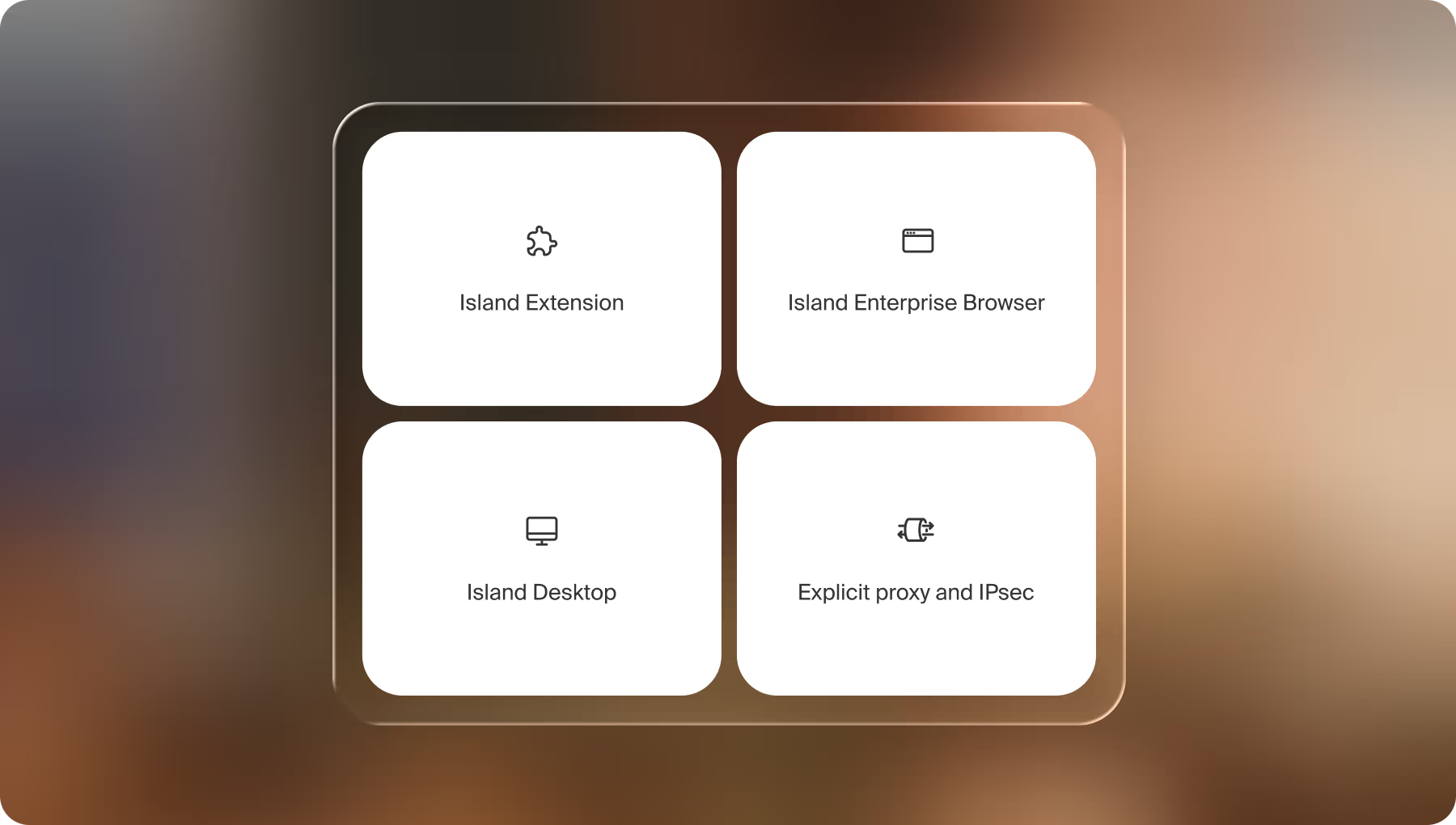
Most SASE investments deliver partial value since rollouts stall before coverage is complete. With Island, you can deploy in phases, each delivering standalone value from day one. No waiting for full rollout to see results.
Phase 1 - Island Extension Immediate policy control on existing Chrome or Edge browsers. No network reconfiguration. No rip-and-replace. Governance starts on day one.
Phase 2 - Island Enterprise Browser Built on Chromium with native support for IPv6, TLS 1.3, HTTP/3, and post-quantum cryptography. Full DOM-level enforcement. No bypass lists required.
Phase 3 - Island Desktop Extend the same policy model to desktop applications, legacy protocols, and device-level traffic. One identity. One posture evaluation. One policy fabric across browsers and devices.
Phase 4 - Explicit proxy and IPsec For environments where the browser or endpoint agent can't be deployed, Island supports explicit proxy (PAC file) for agentless managed deployments, and IPsec tunnels for site-level coverage without endpoint changes. Both extend the same policy model to environments that can't run endpoint enforcement.
Each phase builds on the last, and every phase is independently defensible as an investment.
For a deeper look at how Island stacks up against legacy SASE and VPN approaches, see the Enterprise Browsers, SASE, and VPN comparison webinar, and the Island Enterprise Browser Buyer's Guide.
Island Enterprise Network Closes the SASE Gap
Island Enterprise Network closes three gaps at once. It enables stronger security at the presentation layer, a better user experience with most traffic going direct, and simpler IT operations with one policy engine across browser, endpoint, and network.
That's what Island calls the perfect packet: for every session, the optimal path is chosen. In most cases, there is no path at all; enforcement runs locally, and the packet goes direct.
Frequently asked questions
How is Island Enterprise Network different from traditional SASE solutions?
Traditional SASE routes all traffic through a cloud PoP for inspection, which creates performance problems and an ever-growing list of bypass exemptions as modern encryption (TLS 1.3, HTTP/3, QUIC) makes break-and-inspect increasingly unworkable. Island moves enforcement to the browser and endpoint, and policy is applied at the DOM layer before data leaves the device, with no traffic rerouting or TLS interception required.
How does Island handle AI and agentic AI workflows?
Island governs AI at the point of interaction rather than blocking it outright. Data boundaries define which tools and tenants are approved. Content-aware detection inspects prompts and uploads in real time. For agentic AI specifically — including tool calls, MCP access, and agent-to-agent communication — every action is governed at the presentation layer and logged, covering workflows that traditional proxies can't see at all.
Do we need to rip and replace our existing infrastructure to deploy Island?
No. Island is designed for phased deployment, with each phase delivering standalone value from day one. You can start with the Island Extension on existing Chrome or Edge browsers (no network reconfiguration needed), then progress to the full Enterprise Browser, then Island Desktop for device-level traffic, each building on the last without requiring a full rollout before you see results.
What happens if a major cloud provider has an outage?
Island's global network runs dual independent network stacks across multiple hyperscalers (Google Cloud, AWS, and Azure) with 100+ PoP locations. Each stack runs on different cloud providers, latency is monitored continuously, and failover is automatic. A regional cloud outage does not cause a user-facing disruption.
Does Island cover traffic outside the browser, like desktop apps and legacy protocols?
Yes. Island Desktop intercepts out-of-browser traffic at the device level and steers it selectively to Island Global Network for inspection only when policy requires it, using WireGuard-based tunneling across all ports and protocols. For environments where neither the browser nor endpoint agent can be deployed (branch locations, IoT/OT devices, legacy systems) DNS steering and IPsec tunnels extend baseline coverage under the same policy model.
Idan is a Product Group Manager at Island, responsible for the Network and ZTNA product domains. His work focuses on Island’s global infrastructure and secure connectivity strategy, enabling reliable, high-performance access for enterprises worldwide.



.svg)
.svg)

